


Introduction
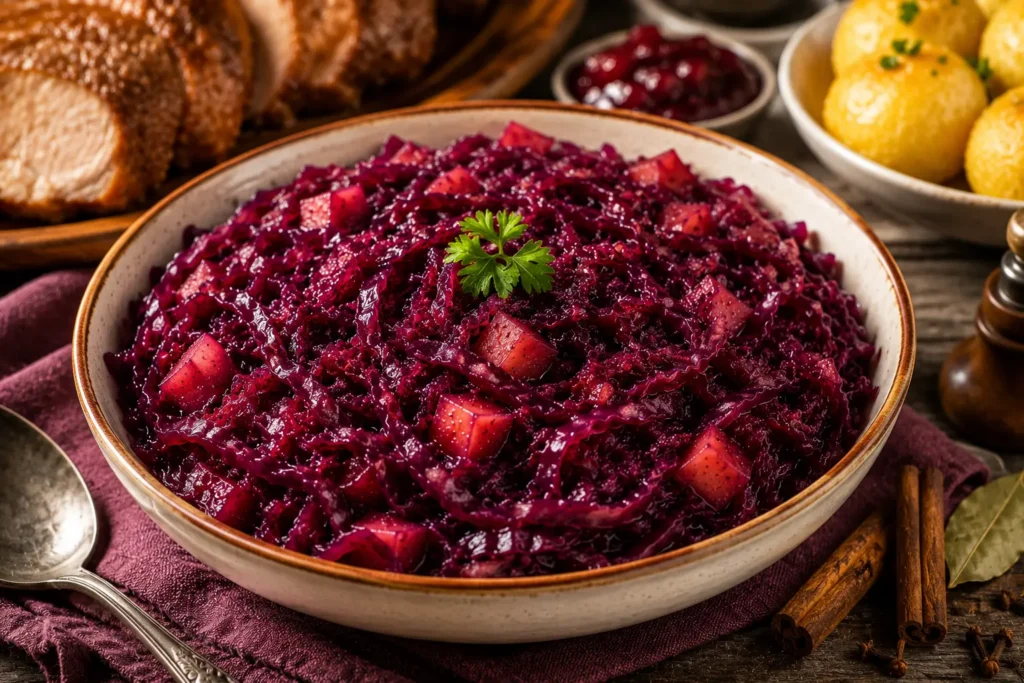
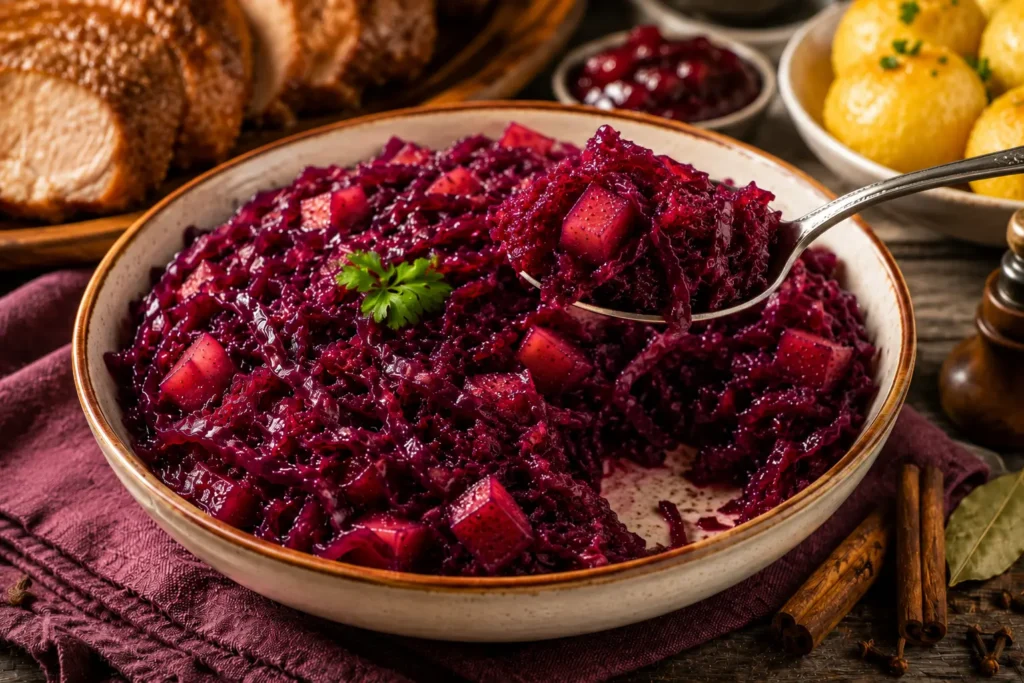
German cuisine offers a treasure trove of comforting side dishes, and Rotkohl stands proudly among the most beloved. This vibrant purple cabbage dish, with its perfect balance of sweet and tangy flavors, complements almost any German main course. Furthermore, this German red cabbage recipe has been passed down through generations, refined to create the perfect accompaniment to your hearty meals.
If you enjoy traditional comfort-food recipes made with simple ingredients, you’ll also love this Easy Beef Enchiladas for Busy Weeknights, a hearty family-friendly dish packed with rich flavor and homemade goodness.
If you’ve ever enjoyed a traditional German meal, you’ve likely encountered this stunning purple side dish. Also known as red cabbage (Rotkohl, Blaukraut, or Rotkraut in German), this simple yet flavorful Rotkohl recipe transforms an ordinary cabbage into an extraordinary culinary experience. Moreover, once you master this recipe, you’ll find yourself making it regularly, not just for special occasions.







What Makes This Rotkohl Recipe Special?
This Traditional German red cabbage recipe balances sweet and sour flavors perfectly. First of all, the slow cooking process allows the cabbage to absorb all the wonderful flavors while maintaining a pleasant texture. Additionally, the apple adds natural sweetness, while the vinegar provides that characteristic tang that makes Rotkohl so distinctive.
If you love baking with apples, be sure to try this Apple Streusel Bread Recipe, which showcases the same sweet fruit flavor in a delicious dessert.
What sets this particular Rotkohl recipe apart is its simplicity and authenticity. Above all, we focus on traditional ingredients that German households have used for centuries. As a result, you’ll create a dish that tastes like it came straight from a German grandmother’s kitchen.
Ingredients for Perfect Rotkohl
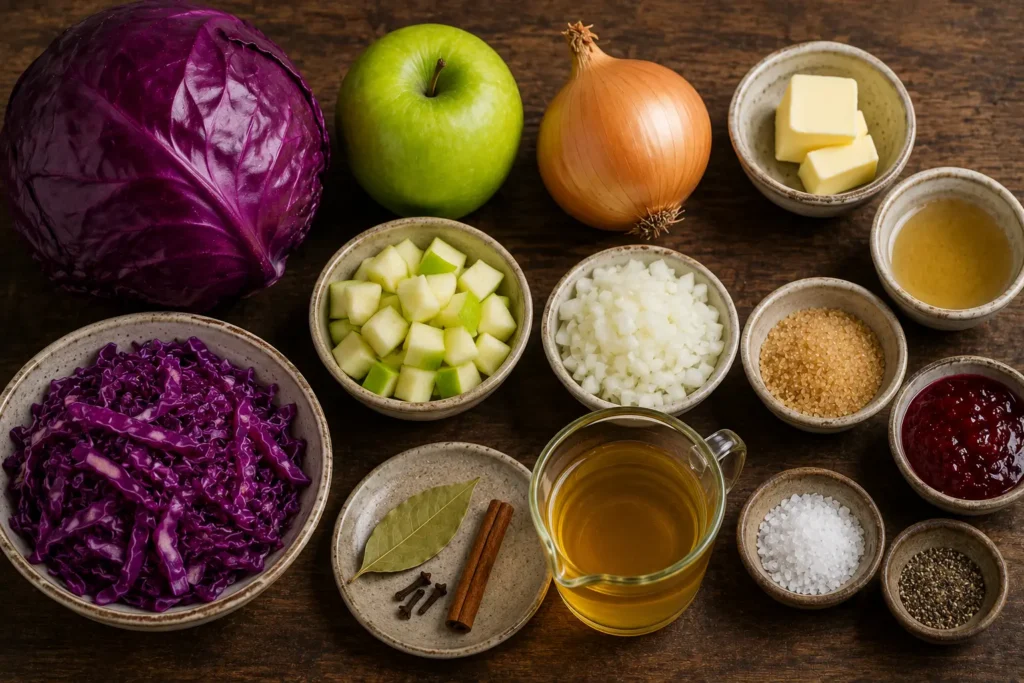
- 1 medium red cabbage (about 2 pounds)
- 1 large apple (preferably tart, like Granny Smith)
- 1 medium onion
- 2 tablespoons butter or bacon fat
- 3 tablespoons apple cider vinegar
- 2 tablespoons sugar (adjust to taste)
- 1 bay leaf
- 3 whole cloves
- 1 cinnamon stick
- 1 cup water or apple juice
- Salt and freshly ground black pepper to taste
- Optional: 1 tablespoon red currant jelly
Step-by-Step Rotkohl Recipe
Preparing the Ingredients
- First, remove the outer leaves of the cabbage and cut it into quarters.
- Next, remove the core from each quarter.
- Thinly slice the cabbage (about ⅛-inch thick) or shred it using a food processor.
- Meanwhile, peel and dice the onion.
- Then, peel, core, and dice the apple into small cubes.
- Subsequently, gather all your spices and remaining ingredients.
Cooking the Rotkohl
1. In a large Dutch oven or heavy-bottomed pot, melt the butter over medium heat.
2. Add the diced onion and sauté until translucent, about 3-4 minutes.
3. Afterwards, add the shredded cabbage and diced apple to the pot, stirring to combine with the onions.
4. Then, add the vinegar, sugar, bay leaf, cloves, cinnamon stick, and water (or apple juice).
5. Consequently, bring the mixture to a boil, then reduce heat to low.
6. Cover and simmer for 45-60 minutes, stirring occasionally, until the cabbage is tender but still has some bite.
7. If the mixture becomes too dry, add a little more water or apple juice.
8. Finally, season with salt and pepper to taste.
9. For added richness, stir in the red currant jelly at the end of cooking (if using).
Tips for the Perfect Rotkohl
For the best results with your easy Rotkohl recipe, keep these helpful tips in mind:
- Better with Age: Like many German dishes, Rotkohl actually improves in flavor when made a day ahead and reheated.
- Texture Control: The cooking time determines the texture – for crunchier cabbage, cook for less time; for softer cabbage, cook longer.
- Color Preservation: A splash of vinegar at the end of cooking helps maintain the vibrant purple color.
- Sweet Options: Instead of sugar, you can use apple sauce, honey, or maple syrup for different flavor profiles.
- Spice Adjustments: Feel free to adjust the spices based on your preference – some regions use more cinnamon, others focus on cloves.
Serving Suggestions
Rotkohl pairs beautifully with many German main dishes. Here are some perfect companions for your homemade Rotkohl:
- Sauerbraten (German pot roast)
- Rouladen (beef rolls)
- Schnitzel (breaded cutlets)
- Bratwurst or other German sausages
- Schweinebraten (roast pork)
For a complete German meal experience, serve your Rotkohl alongside potato dumplings (Knödel) or German potato salad.
For an extra comforting side dish, pair your meal with these Cheesy Bacon Hasselback Potatoes, featuring crispy edges and rich flavor.
Variations of Traditional Rotkohl Recipe
While this traditional Rotkohl recipe stays true to tradition, several regional variations exist throughout Germany:
- Bavarian Style: Includes a tablespoon of bacon fat and sometimes a splash of red wine
- Northern German Style: Often made with a touch of goose or duck fat for richness
- Sweet Version: Some regions add raisins or currants for extra sweetness
- Spiced Version: Additional spices like juniper berries, allspice, or star anise
- Modern Twist: A splash of balsamic vinegar instead of apple cider vinegar
Storage and Make-Ahead Tips
One of the best things about this Rotkohl recipe is how well it keeps:
- Make-Ahead: Prepare Rotkohl 1-3 days before serving for enhanced flavor. Make-ahead recipes are always helpful for busy schedules, and this Mushroom Meatloaf Recipe is another great meal-prep-friendly dish that tastes even better the next day.
- Refrigeration: Store in an airtight container in the refrigerator for up to 5 days.
- Freezing: Rotkohl freezes exceptionally well for up to 3 months.
- Reheating: Warm gently on the stovetop with a splash of water or apple juice to regain the perfect consistency.
Health Benefits of Rotkohl
Besides being delicious, this easy Rotkohl recipe offers several health benefits:
- Red cabbage is rich in vitamins C and K
- Contains powerful antioxidants thanks to its vibrant purple color
- High in fiber, supporting digestive health
- Low in calories while being filling and satisfying
- The cooking method preserves many of the cabbage’s natural nutrients
Common Questions About Rotkohl
Can I make an authentic Rotkohl recipe at home?
Yes! An authentic Rotkohl recipe uses red cabbage, apples, vinegar, and warm spices like cloves and cinnamon. Slow cooking allows the flavors to develop and creates the traditional sweet-and-sour taste.
Why is my Rotkohl turning blue?
Red cabbage changes color based on pH. If it’s turning blue, add a bit more vinegar to increase acidity.
What makes a German Rotkohl recipe different from other red cabbage dishes?
A German Rotkohl recipe is known for its balance of sweet and tangy flavors, achieved with apples, vinegar, and traditional spices. Unlike many red cabbage dishes, it is commonly served alongside German classics such as Sauerbraten, Schnitzel, and Rouladen.
Is Rotkohl the same as sauerkraut?
No, they’re different dishes. Sauerkraut is fermented cabbage, while Rotkohl is cooked with spices and has a sweet-sour flavor.
How do I know when my Rotkohl is done cooking?
The cabbage should be tender but still have a slight bite to it—not mushy.
Why You’ll Love This Rotkohl Recipe
This traditional German red cabbage recipe brings authentic flavors to your table with minimal effort. The combination of sweet and tangy notes creates a versatile side dish that complements so many meals. Rotkohl is especially delicious served with savory pork dishes like this Apple Cider Braised Pork Chops Recipe, where sweet and tangy flavors work beautifully together. Most importantly, it’s a crowd-pleaser that even cabbage skeptics tend to enjoy!
Furthermore, making Rotkohl connects you to centuries of German culinary tradition. The dish has graced tables for generations, bringing families together over satisfying, homemade food. As a result, you’re not just preparing a side dish; you’re participating in a rich cultural heritage.
In conclusion, this Rotkohl recipe deserves a place in your regular rotation. It’s economical, nutritious, delicious, and improves with time—making it perfect for busy households. Therefore, I encourage you to try this recipe and discover why Germans have treasured this vibrant purple cabbage dish for centuries!
Easy German Rotkohl Recipe – Sweet & Tangy Cabbage
Description
Traditional German Rotkohl is a sweet and tangy braised red cabbage side dish, packed with flavor and perfect alongside roasted meats, sausages, and holiday meals.
Ingredients


Instructions
Prepare the Vegetables
-
Slice the Cabbage and Apple
Remove the outer leaves from the red cabbage, cut it into quarters, and remove the core. Thinly slice the cabbage or shred it using a food processor. Dice the onion and peel, core, and chop the apple into small cubes.
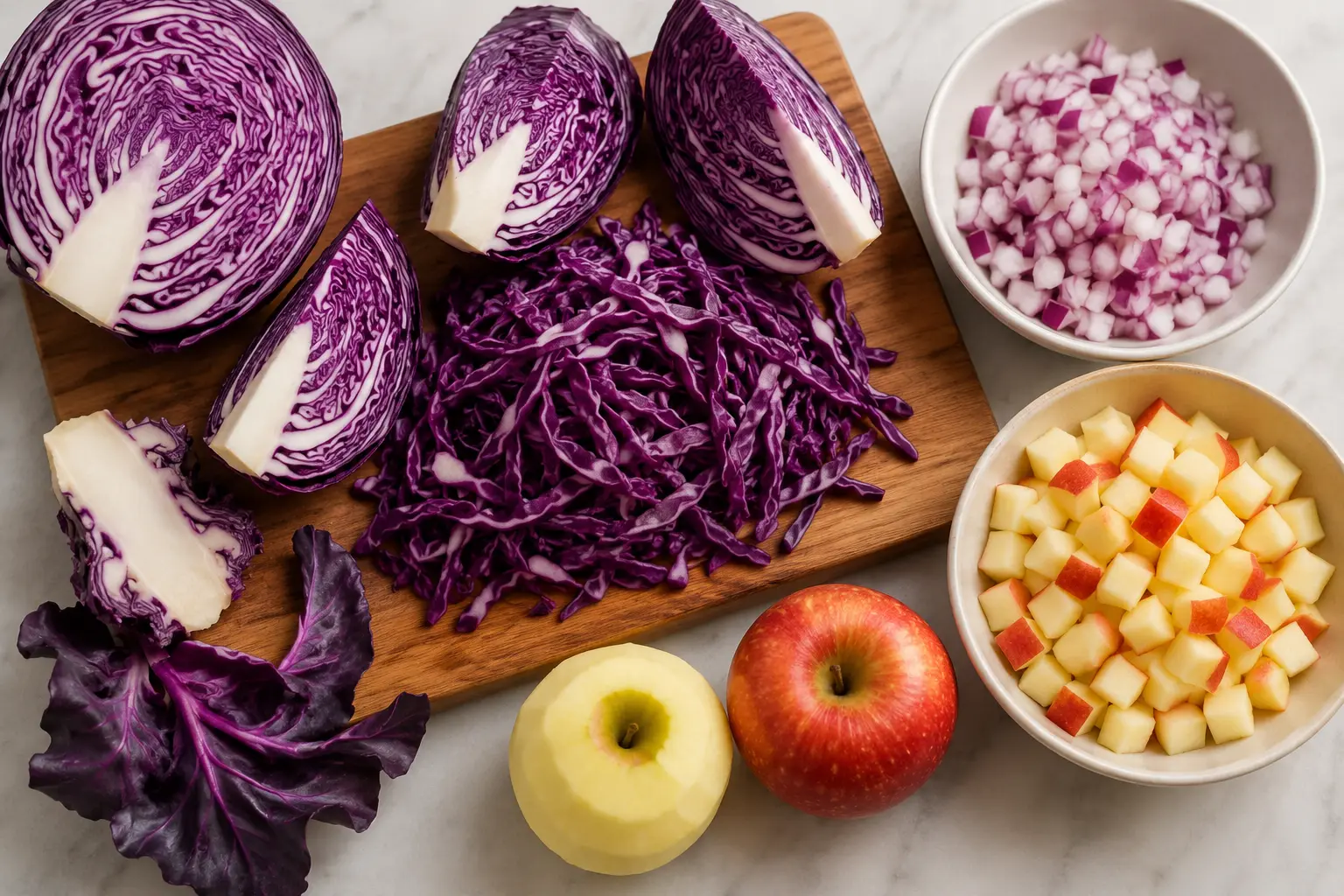 A tart apple such as Granny Smith adds the perfect balance of sweetness and acidity.
Build the Flavor Base
-
Sauté the Onion
Melt the butter or bacon fat in a large Dutch oven over medium heat. Add the diced onion and cook for 3–4 minutes until soft and translucent.
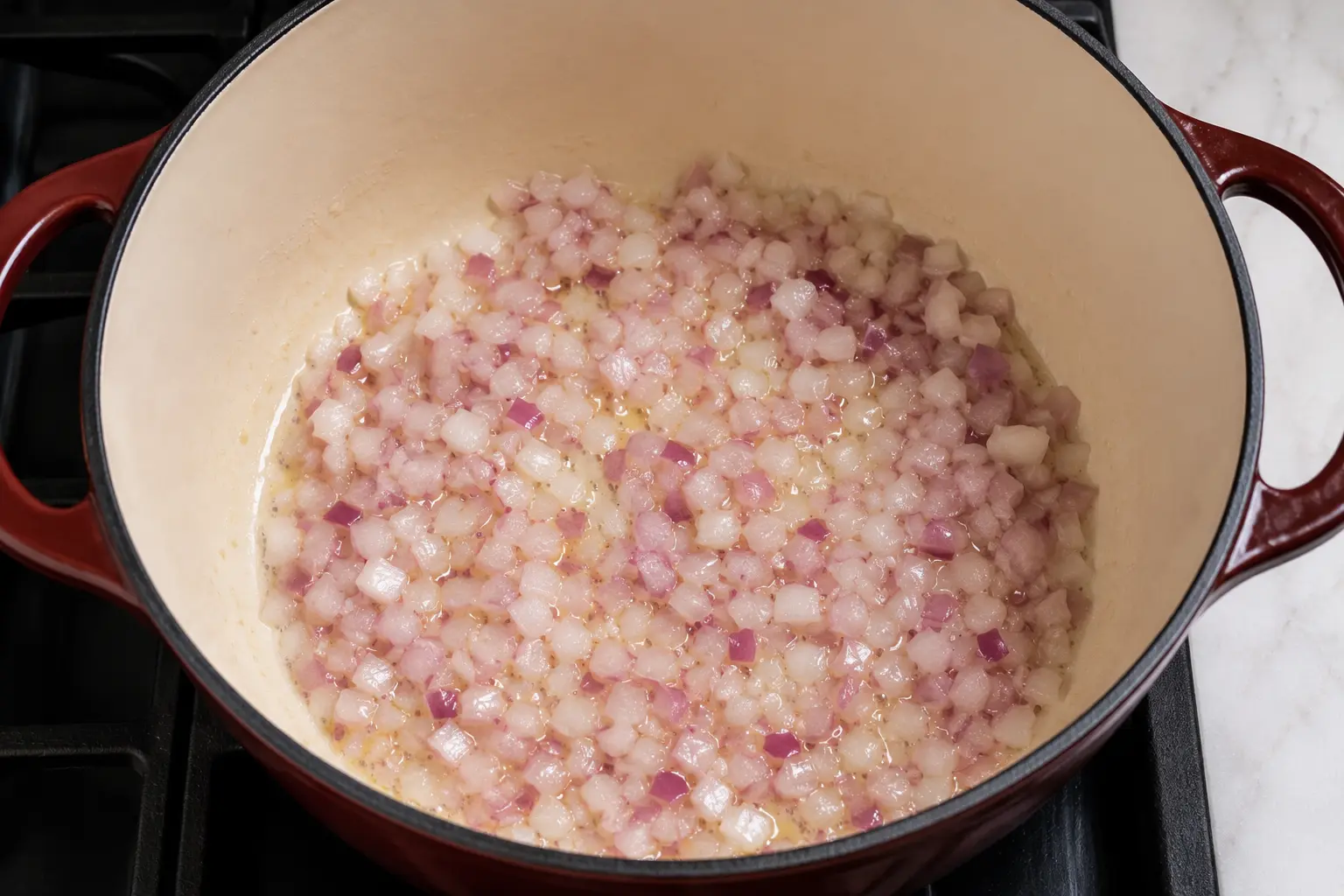 Cooking the onion first creates a sweeter, richer flavor foundation for the Rotkohl.
-
Add the Cabbage and Apple
Stir the shredded cabbage and diced apple into the pot, mixing well with the softened onions.
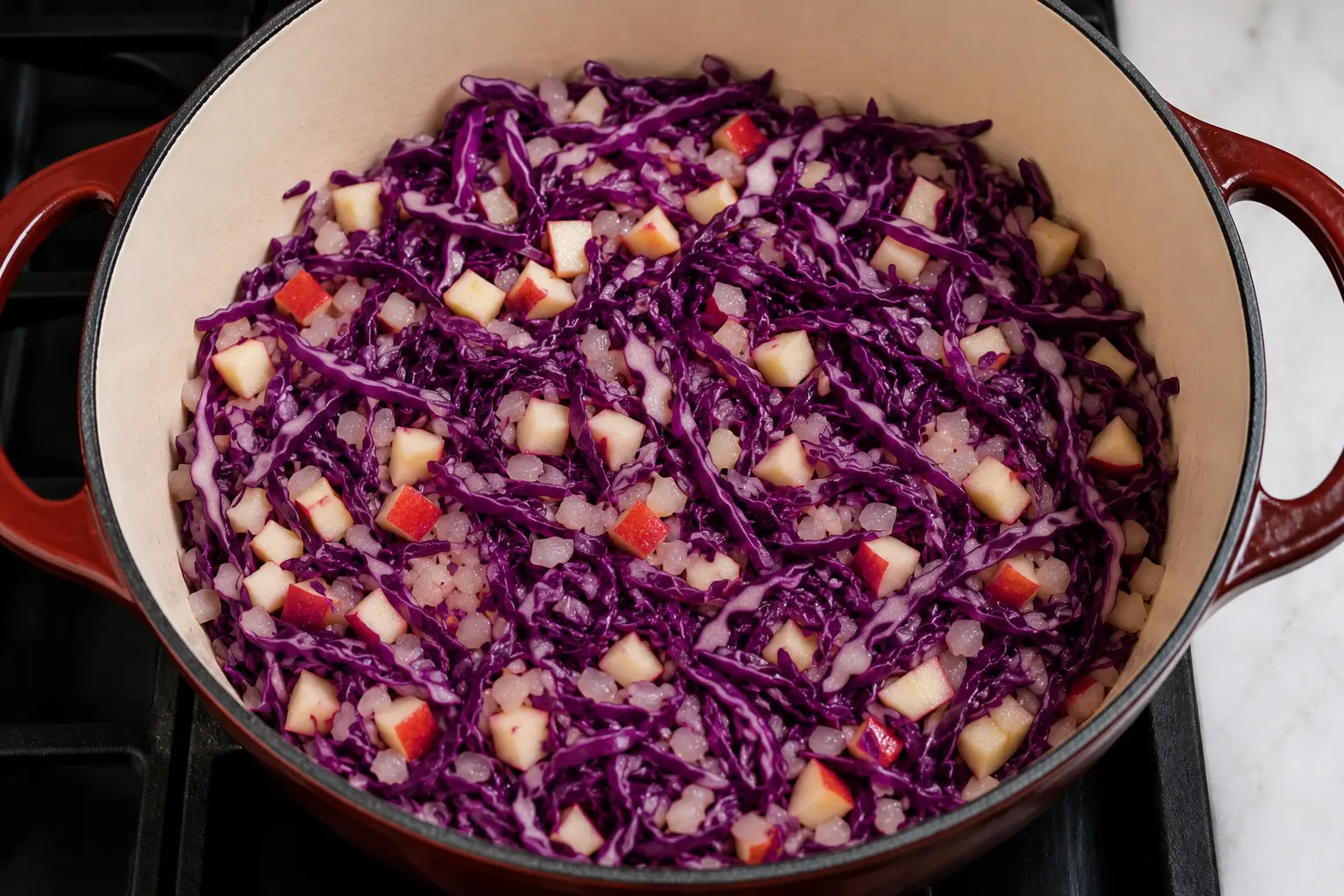 The apple naturally sweetens the cabbage as it cooks and helps create a traditional German flavor.
Season and Simmer
-
Add the Aromatics
Pour in the apple cider vinegar and add the sugar, bay leaf, whole cloves, cinnamon stick, and water or apple juice. Stir thoroughly to distribute the seasonings evenly.
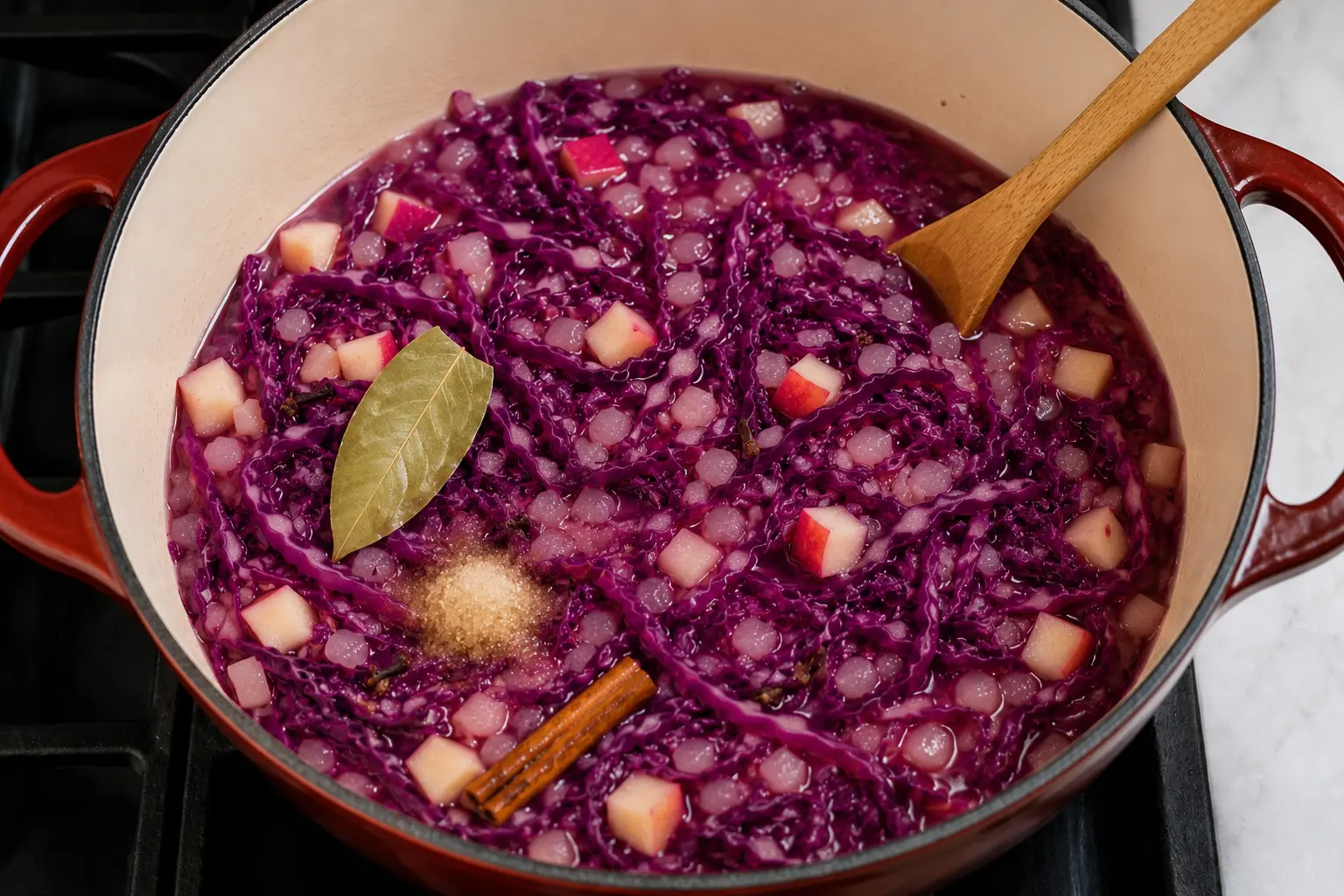 The vinegar helps preserve the cabbage’s vibrant purple-red color during cooking.
-
Slow-Cook to Perfection
Bring the mixture to a gentle boil, then reduce the heat to low. Cover and simmer for 45–60 minutes, stirring occasionally, until the cabbage becomes tender while retaining a slight bite.
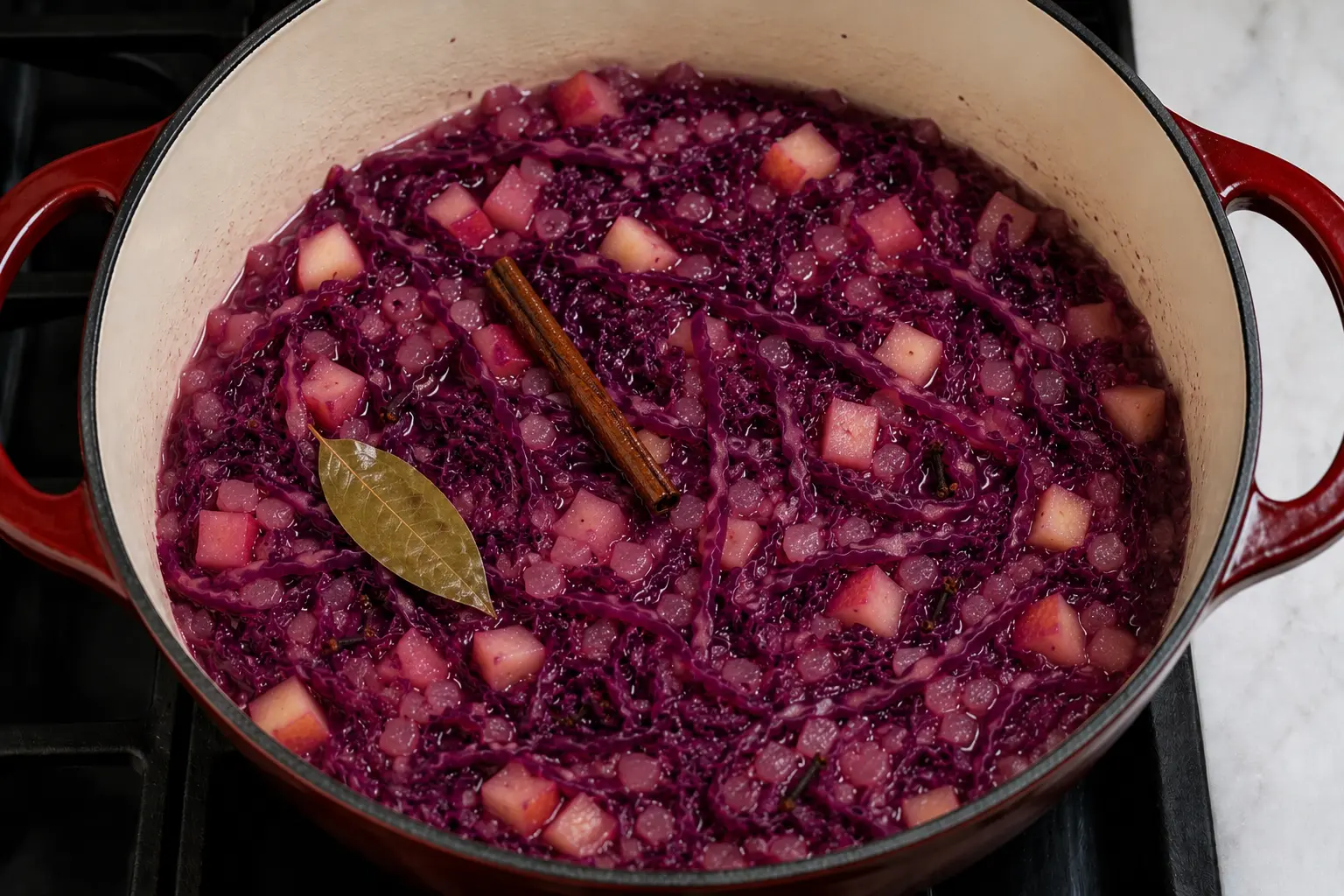 If the cabbage begins to dry out, add a splash of water or apple juice to maintain moisture.
Finish and Serve
-
Adjust the Flavor
Remove the bay leaf, cloves, and cinnamon stick. Season with salt and freshly ground black pepper to taste.
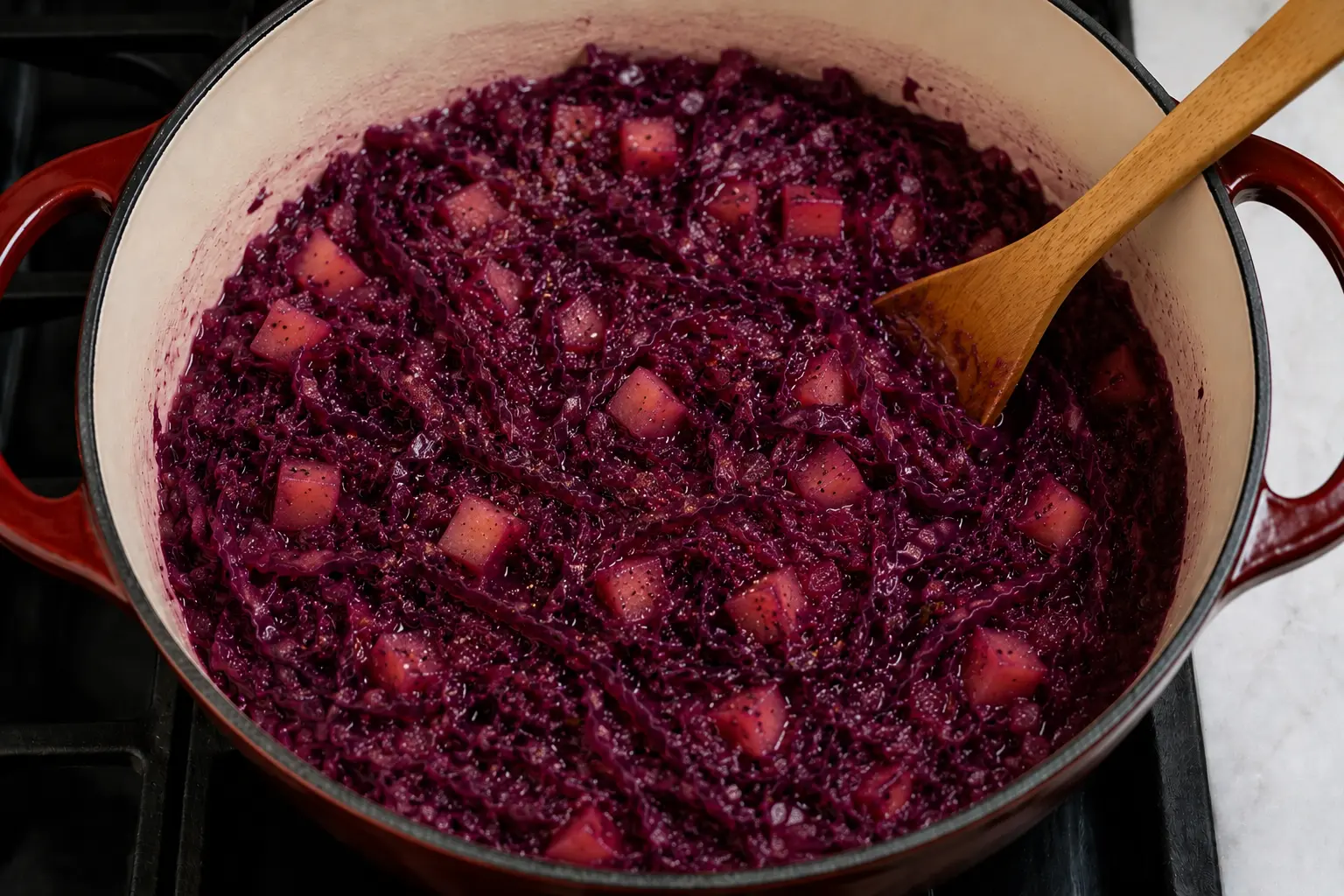 Taste before adding extra sugar, as the apple may provide enough natural sweetness.
-
Add the Final Touch
For a richer and more authentic finish, stir in the red currant jelly until melted and fully incorporated.
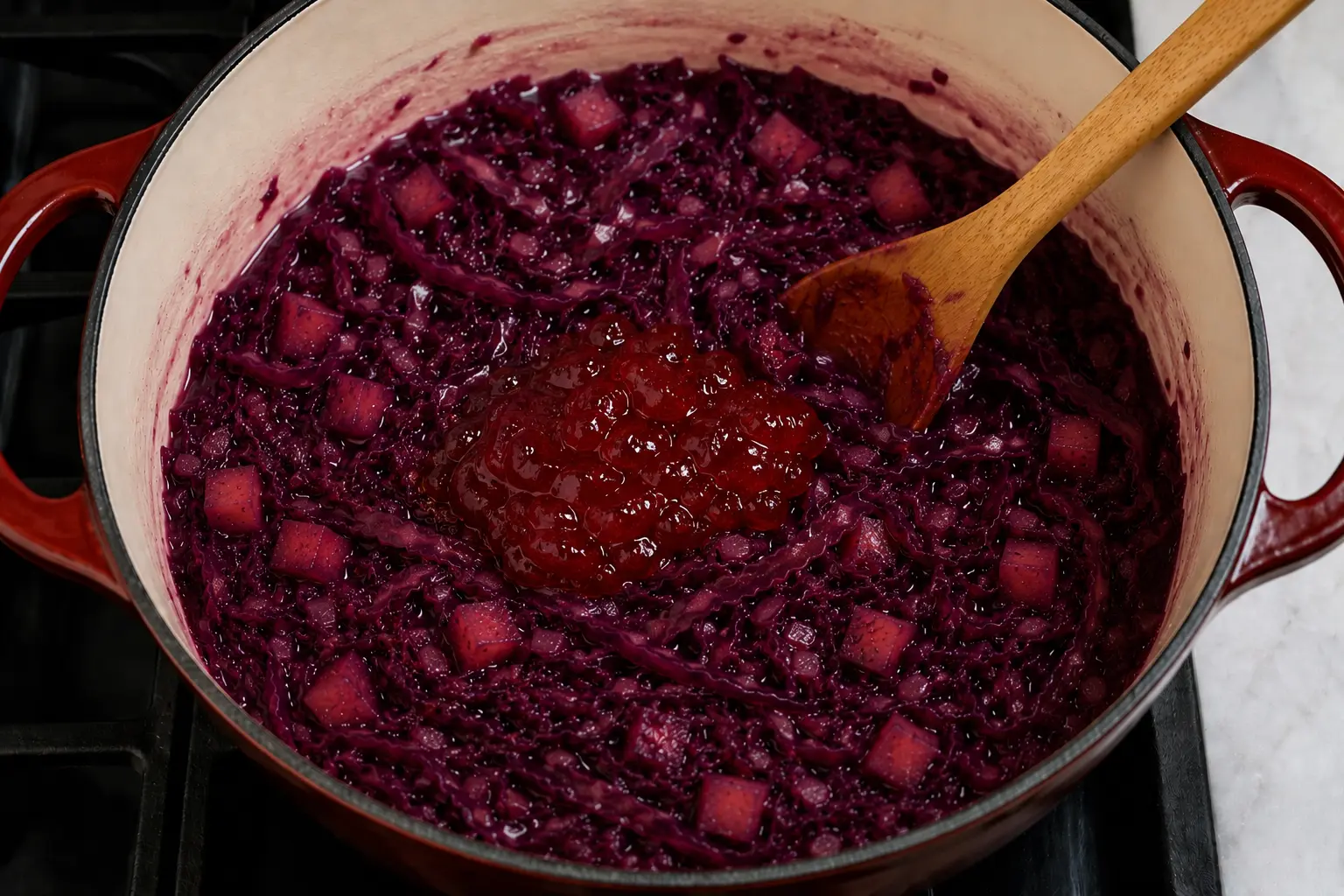 Red currant jelly adds a subtle fruity sweetness and glossy texture often found in traditional German Rotkohl.
-
Serve Warm
Transfer the Rotkohl to a serving dish and enjoy alongside roast meats, sausages, schnitzel, or holiday dinners.
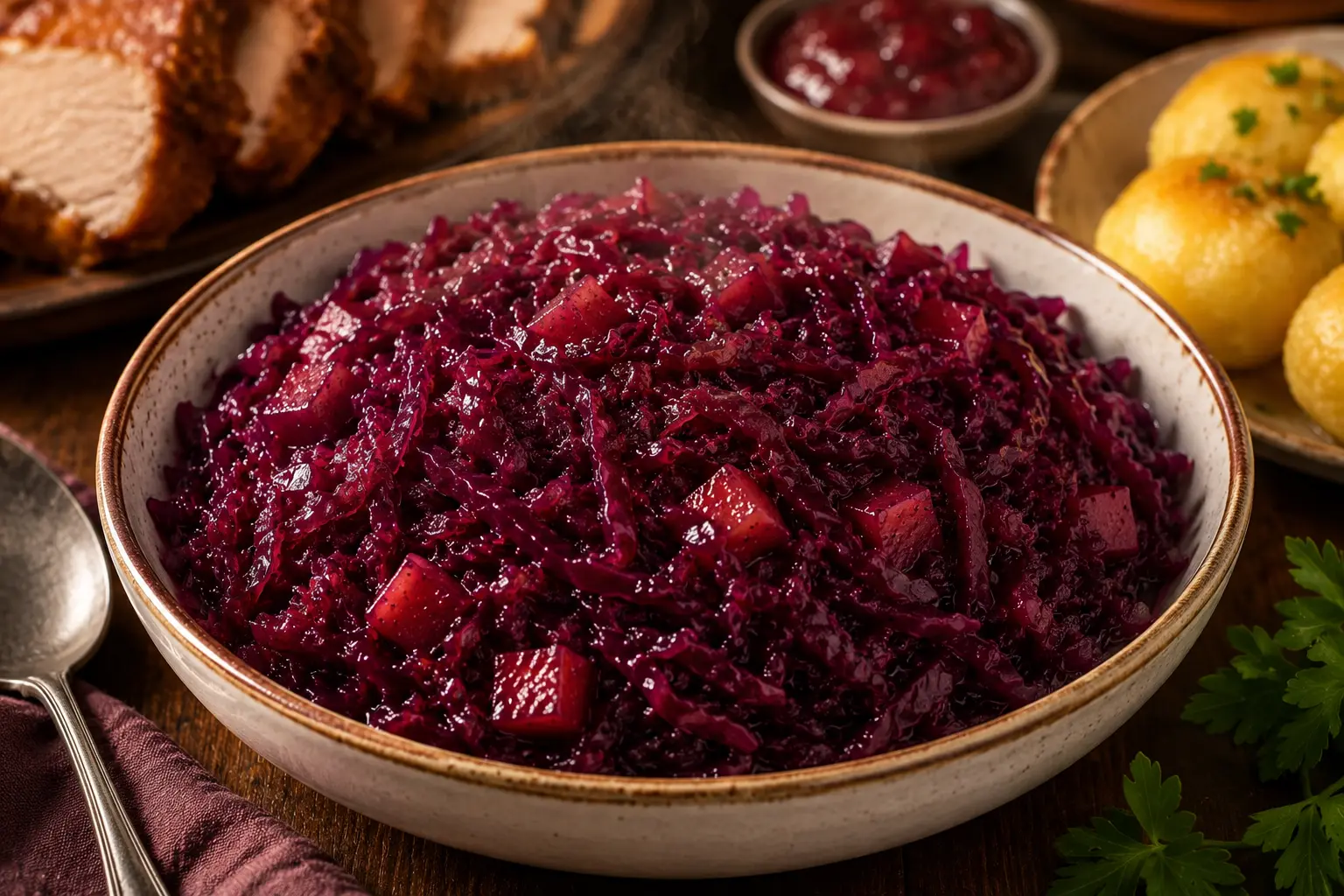 Rotkohl tastes even better the next day after the flavors have had time to develop.

Nutrition Facts
Servings 8
- Amount Per Serving
- Calories 85kcal
- % Daily Value *
- Total Fat 3g5%
- Cholesterol 7mg3%
- Total Carbohydrate 14g5%
- Dietary Fiber 3g12%
- Sugars 10g
- Protein 1g2%
- Vitamin C 35 mg
- Calcium 40 mg
- Iron 0.6 mg
* Percent Daily Values are based on a 2,000 calorie diet. Your daily value may be higher or lower depending on your calorie needs.
Note
- Rotkohl tastes even better when made a day ahead and reheated.
- For a sweeter version, add more sugar or apple juice.
- For more tanginess, add additional vinegar.
- Store in the refrigerator for up to 5 days or freeze for up to 3 months.