


Introduction
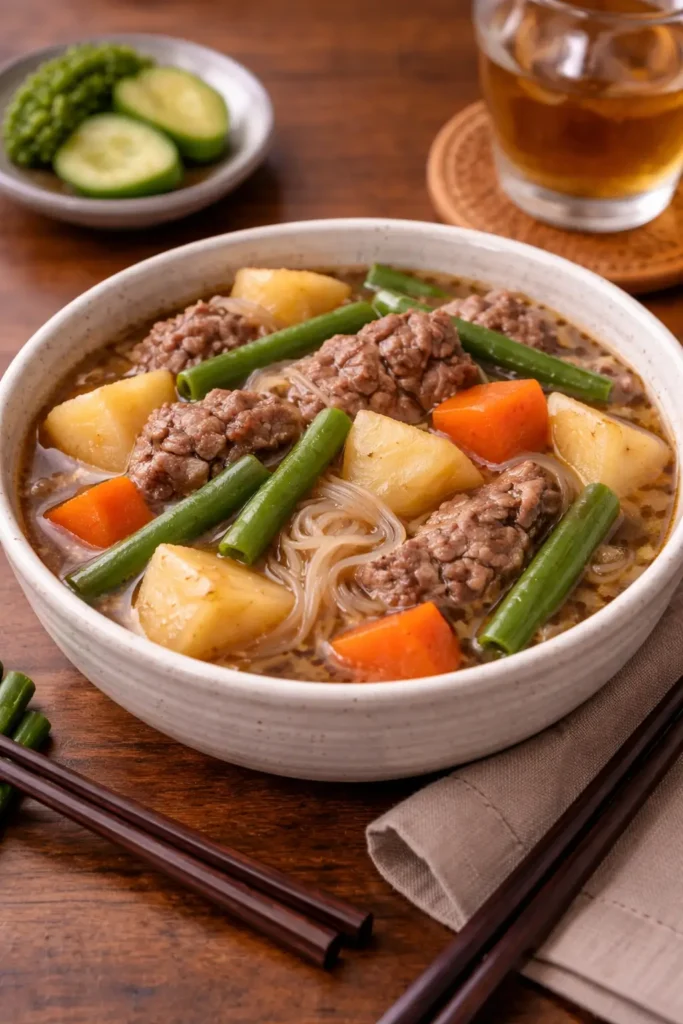
Looking for a comforting Japanese dish that warms both body and soul? This nikujaga recipe is a timeless favorite, featuring tender meat and potatoes simmered in a rich, savory-sweet broth. Rooted in traditional home cooking, Japanese nikujaga highlights simple ingredients elevated by dashi, soy sauce, and mirin.
If you enjoy quick and comforting homemade dinners, you might also like this easy chicken stir-fry in 30 minutes, a flavorful one-pan meal perfect for busy weeknights.
If you’re new to Japanese cuisine, this nikujaga stew is a great choice for beginners, with clear steps and accessible ingredients. In this post, you’ll learn how to recreate this classic dish at home, along with helpful tips to achieve the perfect balance of flavor every time.





What Makes Nikujaga Special?
Nikujaga recipe stands out because of its perfect balance between simplicity and depth of flavor. First of all, it represents “ofukuro no aji” (mother’s taste) in Japanese culture – the kind of cooking that makes you feel at home. Moreover, despite its humble ingredients, the dish offers complex flavors from the marriage of sweet and savory elements.
Many people outside Japan might not be familiar with nikujaga, but it’s a staple in Japanese households. Consequently, learning this recipe gives you access to authentic Japanese home cooking rather than just restaurant-style dishes. The beauty of nikujaga lies in its unpretentious nature and soul-satisfying qualities.
Similar to this dish, the best beef stew recipe for cold nights offers a rich and hearty combination of meat and vegetables, making it another comforting option for cozy dinners.
Essential Ingredients for Perfect Nikujaga
To create an authentic nikujaga recipe, you’ll need these key ingredients:
- Thinly sliced beef or pork – Traditionally made with beef in eastern Japan and pork in western Japan
- Potatoes – The star ingredient that absorbs all the delicious flavors
- Onions – Adds sweetness and depth to the broth
- Dashi stock – The foundation of many Japanese dishes
- Soy sauce, mirin, and sugar – Creates the signature sweet-savory flavor profile
- Optional vegetables – Commonly carrots, shirataki noodles, or green beans
Subsequently, the quality of these ingredients will significantly impact your final dish. For instance, using homemade dashi rather than instant will elevate your nikujaga to new heights.
If you’re looking for a lighter yet satisfying meal, this easy lemon garlic pasta is a simple and flavorful dish that pairs well with fresh ingredients and quick cooking methods.
Cooking Tips for Authentic Nikujaga
Before diving into the recipe, here are some helpful tips to ensure your nikujaga turns out perfectly:
- Cut potatoes into large chunks – They should be substantial enough to hold their shape while absorbing flavor
- Brown the meat first – This creates depth of flavor in the final dish
- Arrange potatoes carefully – Place them in a single layer to ensure even cooking
- Use the otoshibuta technique – A drop lid (or parchment paper substitute) helps ingredients cook evenly
- Allow time for flavors to meld – Like many stews, nikujaga tastes even better the next day
After following these tips, your Japanese nikujaga will have that authentic homemade quality. Obviously, practice makes perfect, so don’t worry if your first attempt isn’t exactly like your favorite Japanese restaurant’s version.
Authentic Nikujaga Recipe
Now, let’s get cooking with this traditional Japanese nikujaga recipe!
Ingredients:
- 300g thinly sliced beef (or pork) cut into bite-sized pieces
- 4 medium potatoes, peeled and cut into large chunks
- 1 large onion, sliced into wedges
- 1 medium carrot, cut into chunks (optional)
- 100g shirataki noodles, rinsed and drained (optional)
- 2 tablespoons vegetable oil
- 2 cups dashi stock
- 3 tablespoons soy sauce
- 3 tablespoons mirin
- 2 tablespoons sugar
- 1 tablespoon sake (optional)
- 100g green beans or snow peas, trimmed (optional)
- Salt to taste
How to Make Nikujaga: Step-by-Step Instructions
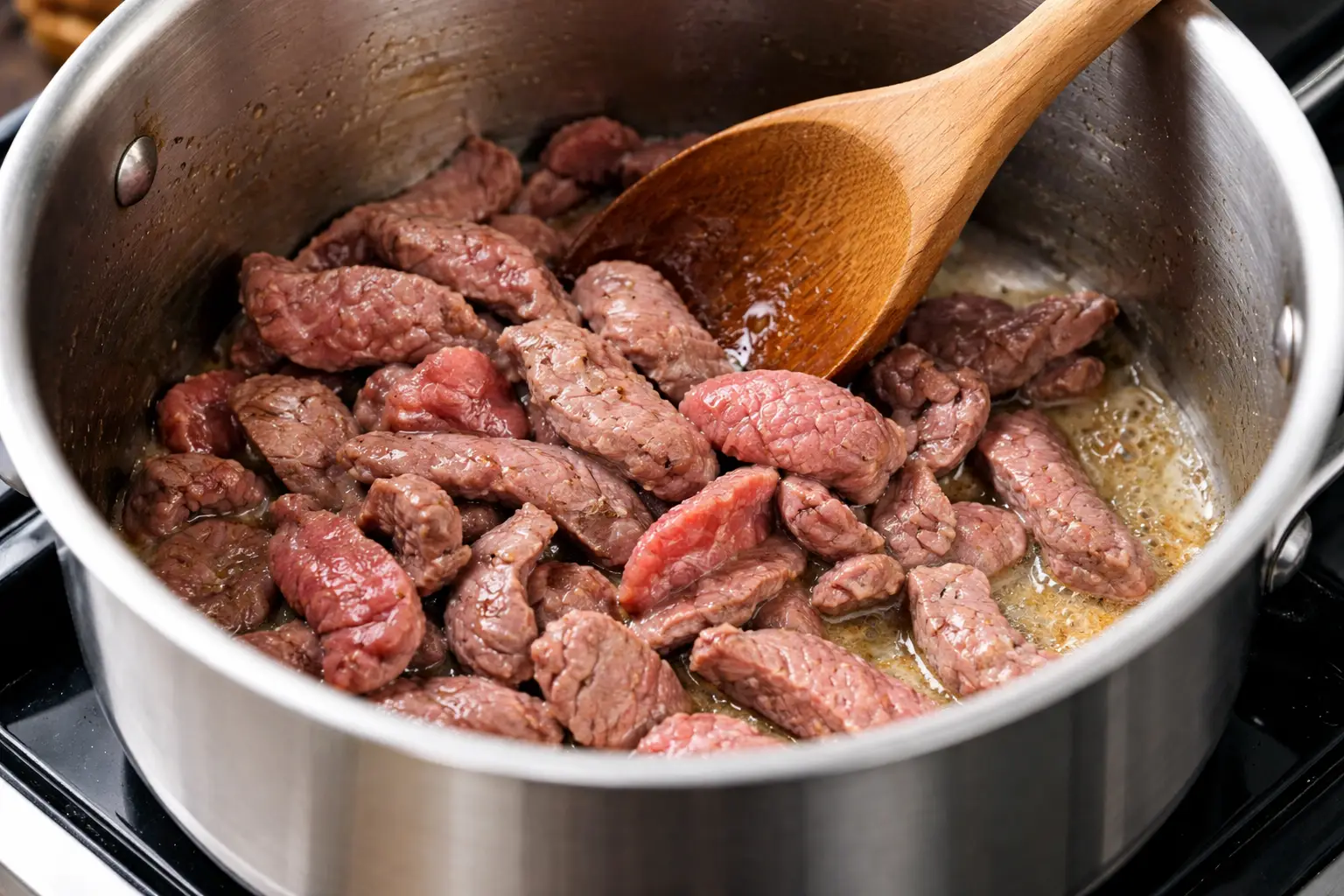
- First, heat the vegetable oil in a large pot over medium heat. Then add the sliced meat and cook until it changes color, about 2-3 minutes.
- Next, add the onion wedges and sauté until they become translucent, approximately 2 minutes.
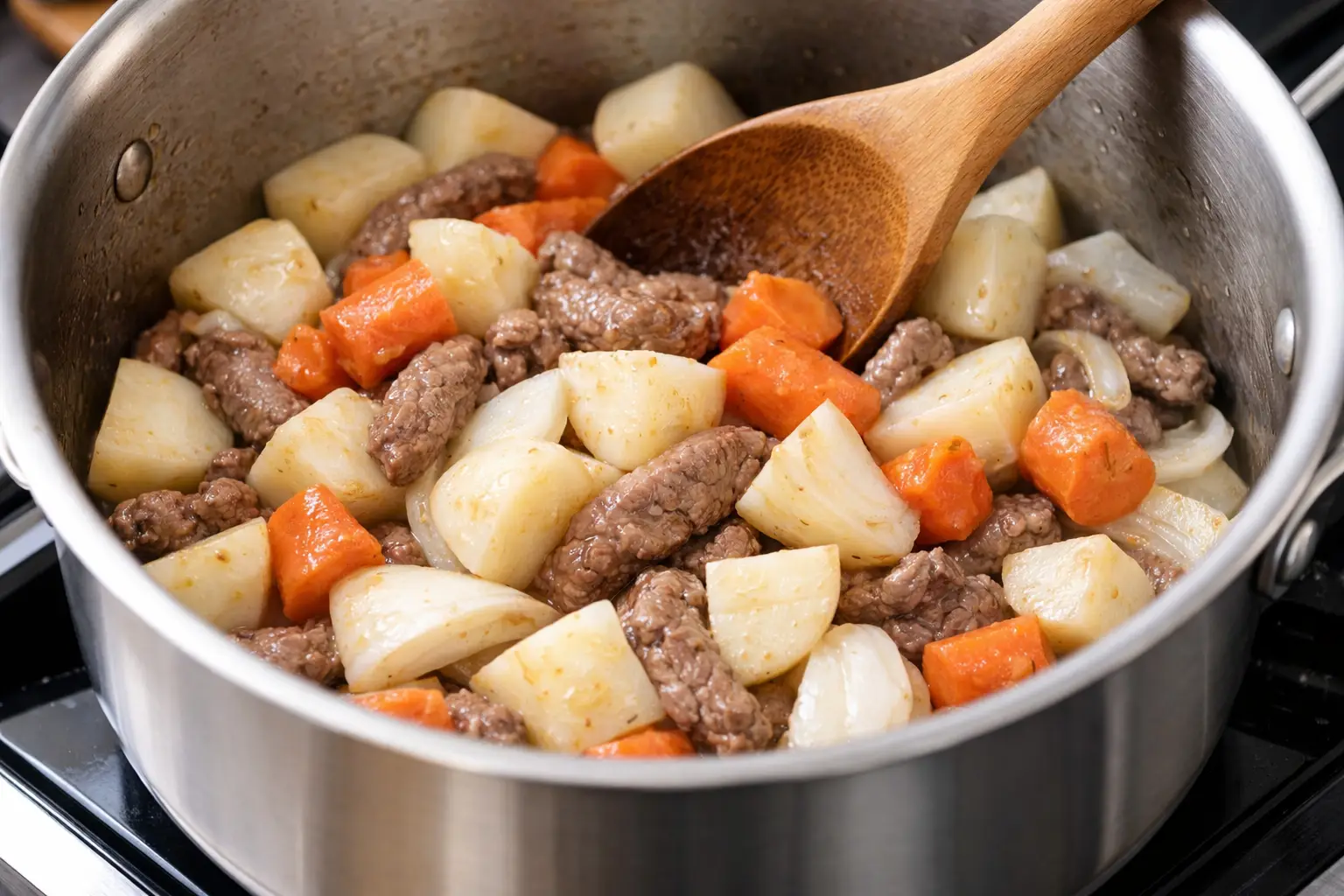
- Subsequently, add the potato chunks and carrot pieces (if using). Stir to coat them with oil.
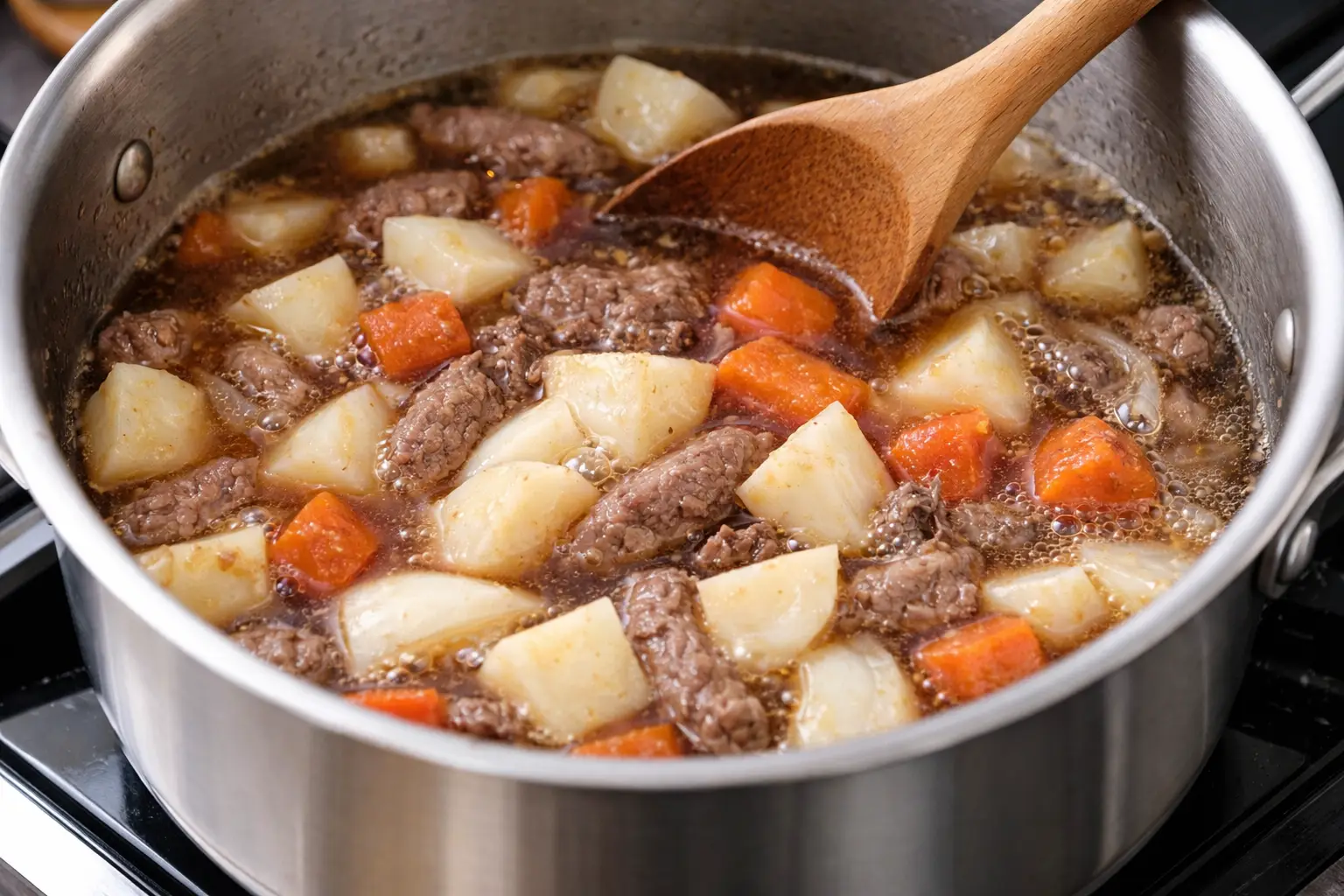
- After that, pour in the dashi stock, soy sauce, mirin, sugar, and sake (if using). Bring the mixture to a boil.
- Once boiling, reduce the heat to low and skim off any foam that rises to the surface.
- Meanwhile, place a drop lid (otoshibuta) or a circle of parchment paper directly on the surface of the liquid. This helps the ingredients cook evenly.
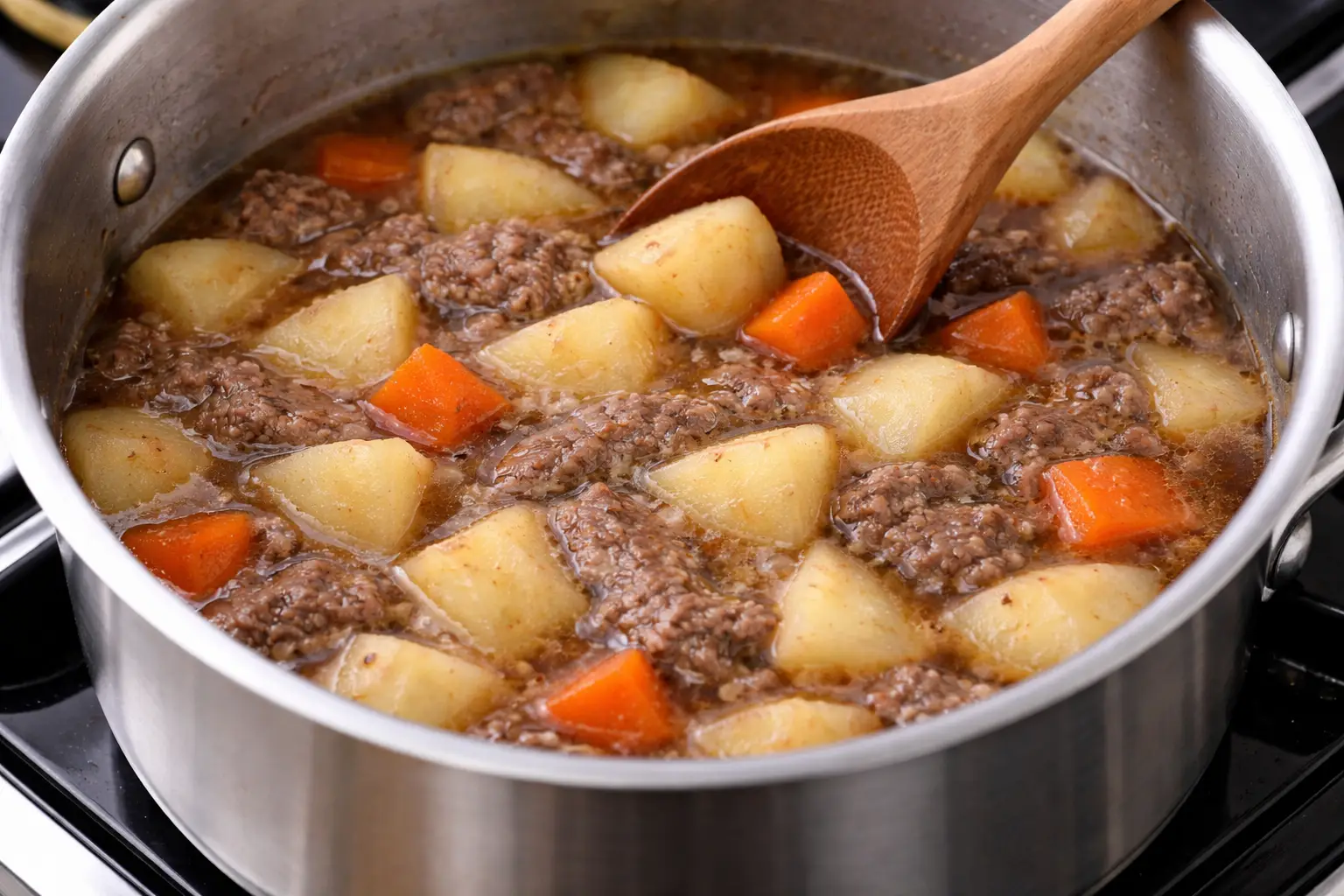
- Simmer for about 15-20 minutes, or until potatoes are tender when pierced with a fork.
- If you’re using shirataki noodles, add them about 10 minutes into the simmering process.
- For green beans or snow peas, add them in the last 2-3 minutes of cooking so they retain their bright color.
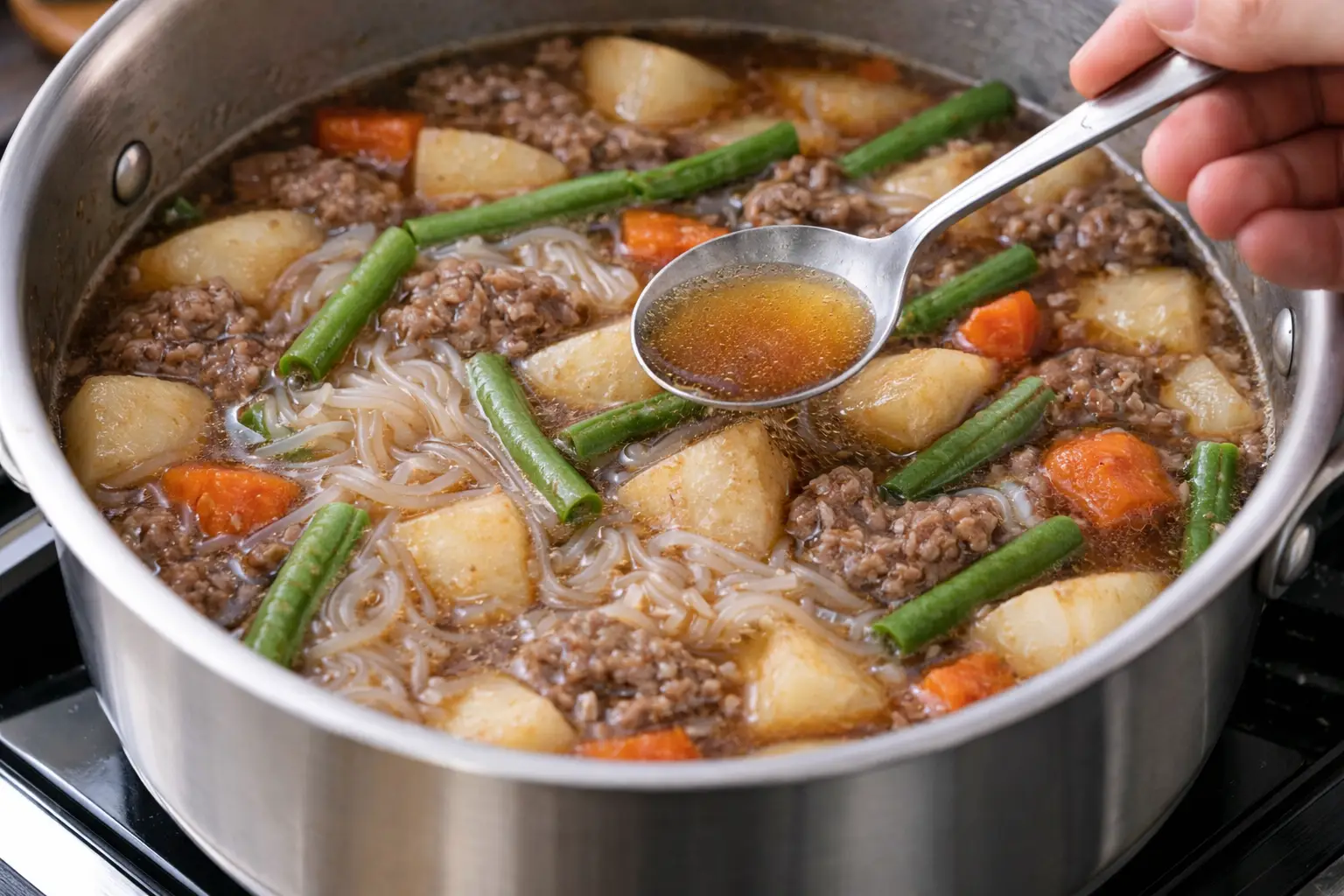
- Finally, taste and adjust seasonings if needed.
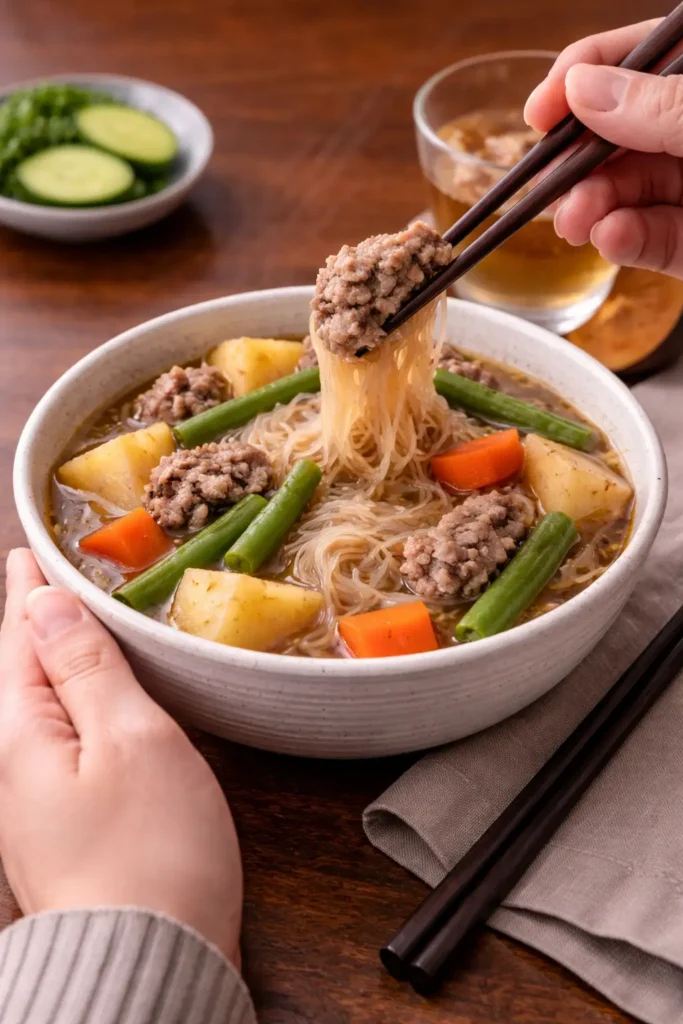
- Consequently, your nikujaga is ready to serve! It pairs perfectly with a bowl of steamed rice.
Serving Suggestions
Nikujaga recipe creates a dish that works wonderfully as part of a traditional Japanese meal. For instance, serve it alongside:
- Steamed white rice
- Miso soup
- Pickled vegetables (tsukemono)
- Simple green salad with sesame dressing
Therefore, you can create a complete and balanced meal that showcases different aspects of Japanese cuisine. Additionally, nikujaga makes excellent leftovers, as the flavors continue to develop overnight.
For a balanced meal, you can serve Nikujaga alongside dishes like this best oven-roasted salmon, which adds a delicious protein option with a lighter, savory flavor.
Regional Variations of Nikujaga
One fascinating aspect of nikujaga recipe is how it varies across Japan. Accordingly, here are some regional variations you might want to explore:
Kanto Style (Eastern Japan)
Uses beef and tends to have a stronger soy sauce flavor.
Kansai Style (Western Japan)
Typically made with pork and has a lighter, sweeter taste.
Hokkaido Style
Often includes butter for richness and sometimes corn as an additional vegetable.
Kyushu Style
May include konnyaku (konjac) and has a slightly spicier profile in some areas.
Therefore, you can experiment with different styles to find your preferred version of nikujaga. Obviously, the core elements remain the same despite these regional differences.
Health Benefits of Nikujaga
Beyond its delicious taste, nikujaga recipe creates a relatively healthy dish:
- Balanced macronutrients – Contains protein from meat, carbohydrates from potatoes, and various micronutrients from vegetables
- Moderate in calories – Can be made with leaner cuts of meat for a lighter meal
- Customizable – Easy to add extra vegetables for additional nutrients
- Comforting without being heavy – Unlike many Western stews, it doesn’t rely on cream or excessive fat
Consequently, nikujaga stew can be part of a nutritious diet while still providing comfort and satisfaction. Moreover, it’s a great way to incorporate Japanese cooking techniques into your meal rotation.
Frequently Asked Questions About Nikujaga
Can I make vegetarian nikujaga?
Yes! Substitute the meat with firm tofu or extra mushrooms. Then use vegetable stock instead of dashi for a fully vegetarian version.
What if I can’t find mirin?
You can substitute mirin with a mixture of 3 parts sake and 1 part sugar, or use sweet sherry in a pinch.
Can I make nikujaga ahead of time?
Yes! Nikujaga can be made ahead of time and reheated gently before serving. In fact, letting the stew rest allows the potatoes and vegetables to absorb more of the savory-sweet broth, making the flavors even richer. Store it in an airtight container in the refrigerator and reheat thoroughly before serving.
How long does nikujaga keep in the refrigerator?
Properly stored in an airtight container, nikujaga stays fresh for 3-4 days. In fact, many people believe it tastes even better the next day as the flavors continue to develop.
Can I freeze nikujaga?
Yes, but the texture of the potatoes may change slightly upon thawing. Freeze in portion-sized containers for up to 1 month.
Conclusion
Nikujaga is a comforting example of authentic Japanese home cooking, known for its rich, savory-sweet flavors and simple ingredients. This japanese beef and potato stew recipe perfectly balances tender meat, soft potatoes, and a flavorful broth. By learning how to make nikujaga at home, you can recreate this classic dish with ease and confidence.
If you enjoy comforting homemade Asian-inspired meals, you might also love this orange chicken better than takeout, a crispy and flavorful dish perfect for a satisfying dinner.
Whether you’re cooking for a cozy dinner or exploring traditional Japanese cuisine, nikujaga offers warmth and satisfaction in every bite. Try it once, and it may quickly become a regular favorite in your kitchen.
Authentic Nikujaga Recipe for a Cozy Japanese Dinner
Description
Authentic Nikujaga is a comforting Japanese beef and potato stew simmered in a savory-sweet soy broth, featuring tender meat, vegetables, and noodles—perfect for a cozy, flavorful dinner at home.
Ingredients


Instructions
Cook the Meat Base
-
Sauté the Meat
Heat the vegetable oil in a large pot over medium heat.
Add the sliced beef (or pork) and cook for 2–3 minutes, until it changes color.
-
Add the Onions
Add the onion wedges and sauté for about 2 minutes until they become soft and translucent.
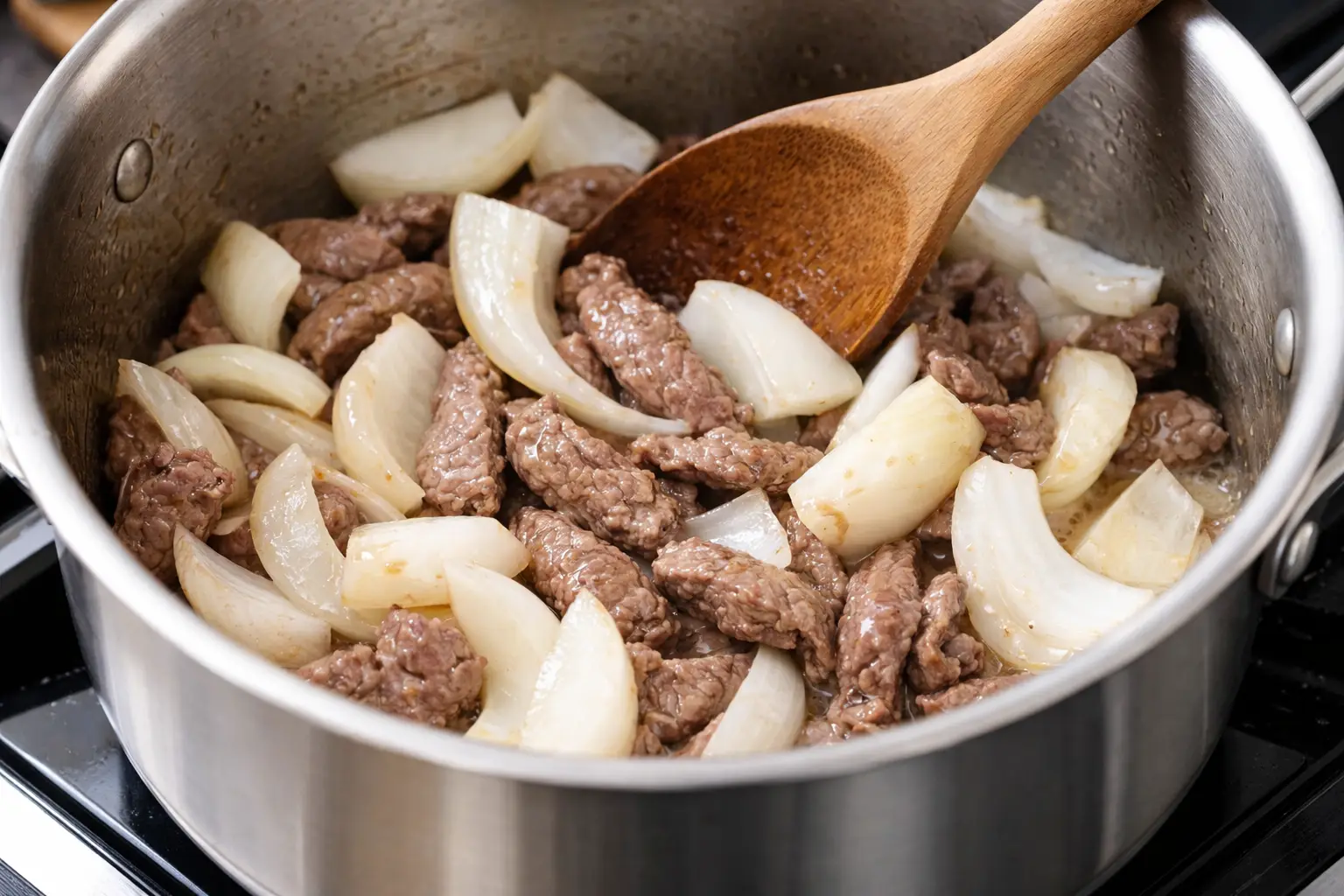 Cooking the onions at this stage builds a flavorful base for the dish.
Add Vegetables and Broth
-
Add Root Vegetables
Add the potato chunks and carrot pieces (if using). Stir well to coat everything with the oil.
-
Pour in the Seasonings
Add the following to the pot:
- Dashi stock
- Soy sauce
- Mirin
- Sugar
- Sake (optional)
Bring the mixture to a gentle boil.
-
Skim and Simmer
Once boiling, reduce the heat to low and skim off any foam that rises to the surface.
Place a drop lid (otoshibuta) or a piece of parchment paper directly on top of the ingredients.
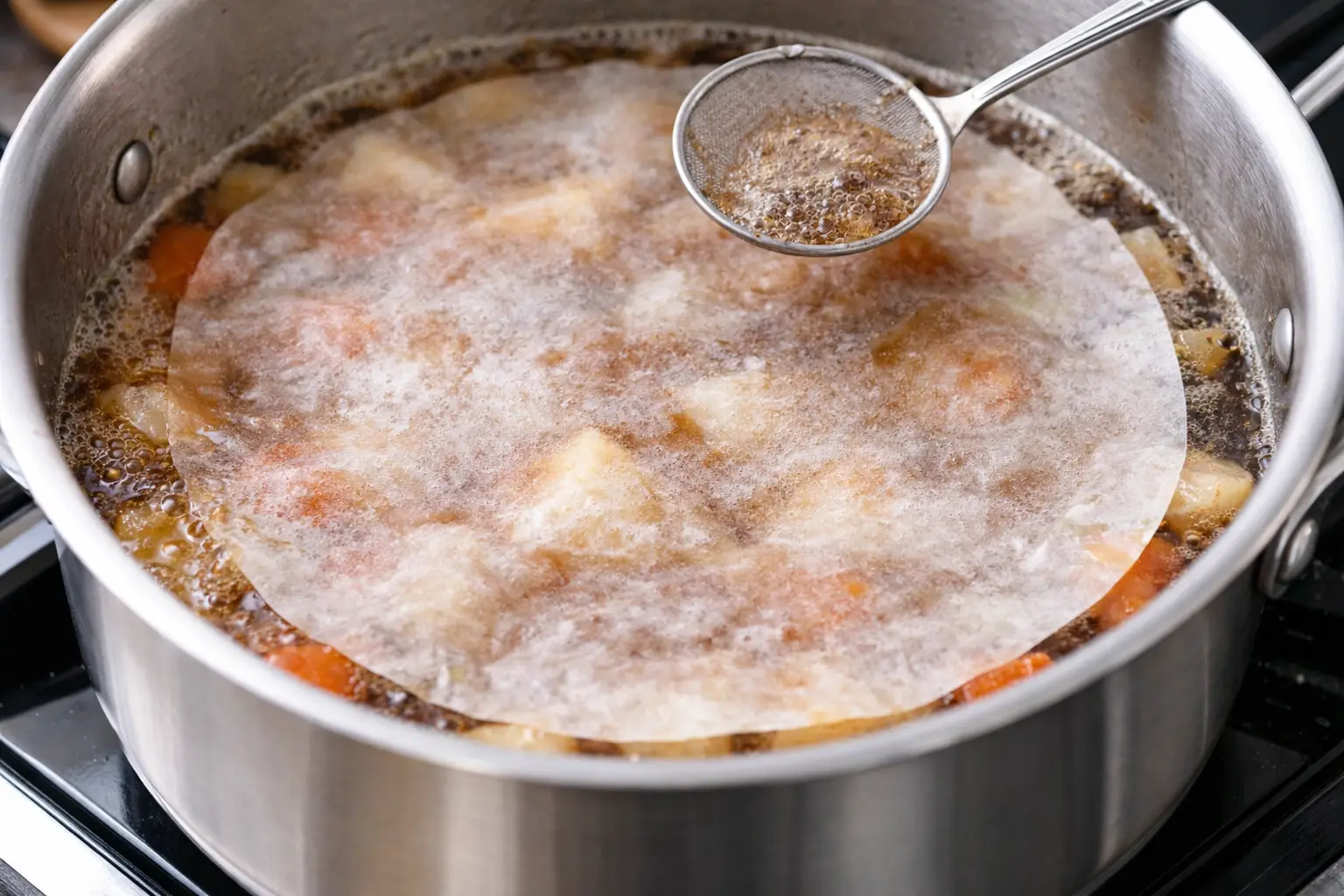 This helps the ingredients cook evenly and absorb the flavors more effectively.
Simmer the Dish
-
Cook Until Tender
Let the dish simmer for 15–20 minutes, or until the potatoes are fork-tender.
-
Add Optional Ingredients
-
Add shirataki noodles about 10 minutes into cooking.
-
Add green beans or snow peas during the last 2–3 minutes to keep them vibrant and crisp.
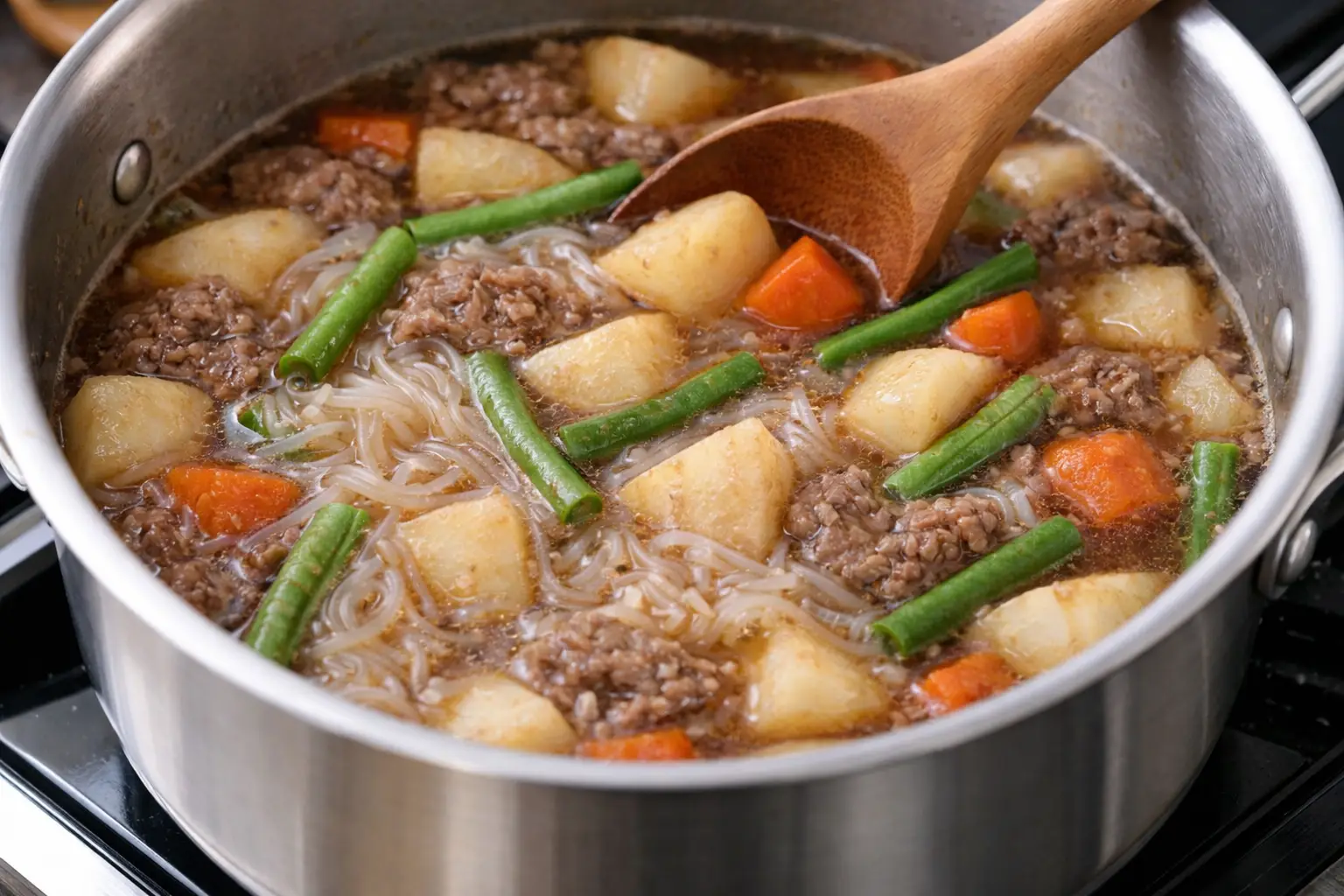 Adding delicate ingredients later prevents overcooking and preserves texture.
 -
Final Adjustments and Serve
-
Taste and Finish
Taste the broth and adjust seasoning if needed.
-
Serve the Nikujaga
Serve the dish warm, ensuring each portion has a balance of meat, vegetables, and broth.
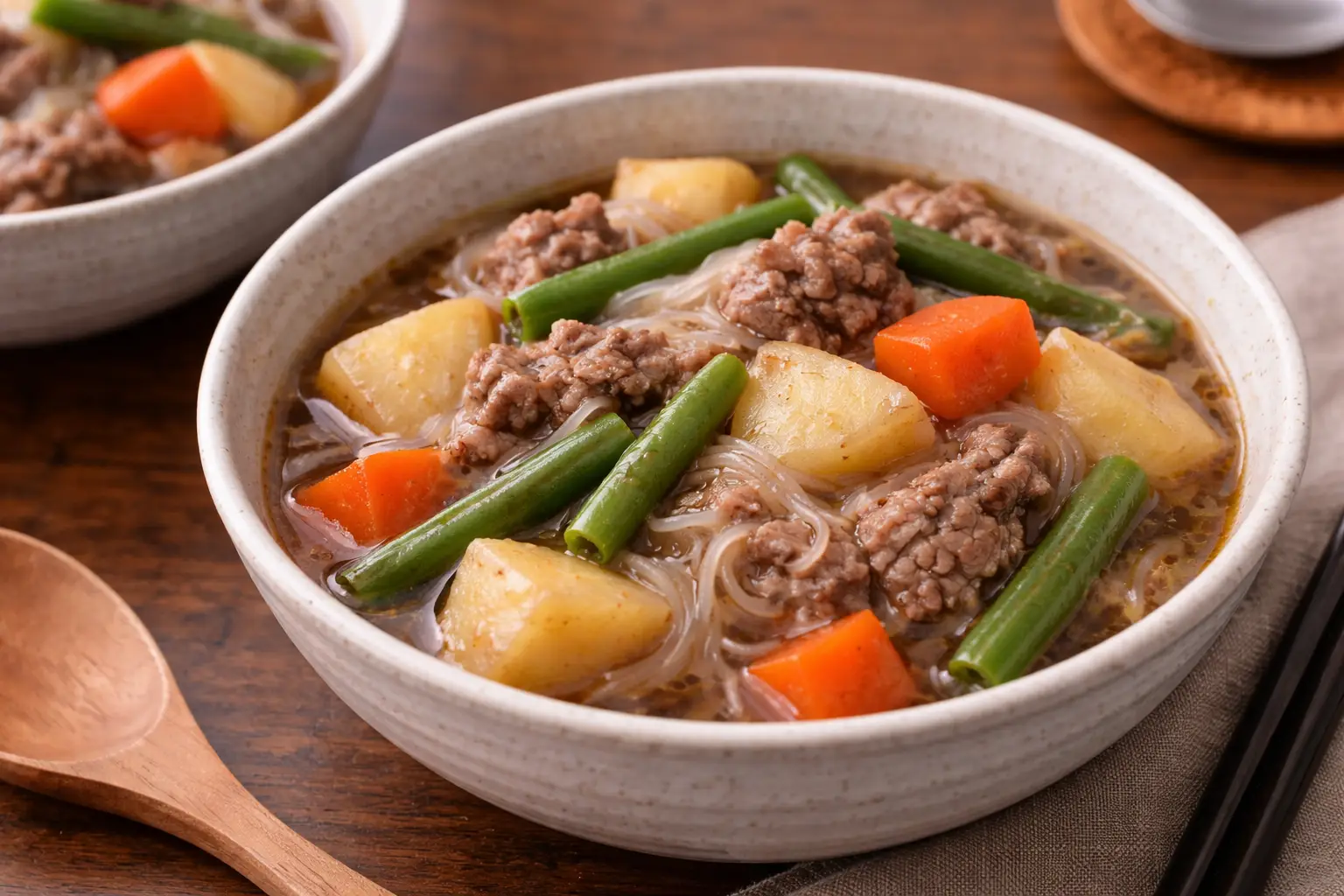 Nikujaga pairs beautifully with a bowl of steamed rice, making it a comforting and complete meal.
Nutrition Facts
Servings 4
- Amount Per Serving
- Calories 420kcal
- % Daily Value *
- Total Fat 18g28%
- Saturated Fat 6g30%
- Cholesterol 70mg24%
- Total Carbohydrate 38g13%
- Dietary Fiber 5g20%
- Sugars 10g
- Protein 26g52%
- Vitamin A 4200 IU
- Vitamin C 28 mg
- Calcium 70 mg
- Iron 3.5 mg
* Percent Daily Values are based on a 2,000 calorie diet. Your daily value may be higher or lower depending on your calorie needs.