


Introduction
Have you ever ordered tuna tataki with ponzu sauce at a Japanese restaurant and wished you could recreate that same magic in your own kitchen? Good news! This impressive dish is actually quite simple to prepare at home. In this guide, I’ll walk you through creating restaurant-quality tuna tataki with ponzu sauce that will amaze your family and dinner guests. Moreover, you’ll discover that this elegant Japanese appetizer requires just a few quality ingredients and basic techniques to master.
What Exactly Is Tuna Tataki?
Before diving into the recipe, let’s understand what makes tuna tataki with ponzu sauce so special. Essentially, tataki is a Japanese cooking technique where the outer surface of fish or meat is seared quickly at high heat, while the inside remains raw or rare. Additionally, the name “tataki” comes from the Japanese word “tataku,” meaning “to pound” or “to hit,” which traditionally referred to how the fish was prepared before cooking.
Furthermore, when paired with tangy ponzu sauce, the lightly seared tuna creates a perfect harmony of flavors that balances richness with brightness. Consequently, this dish has become a favorite in Japanese restaurants worldwide.
Selecting the Right Tuna
The foundation of exceptional tuna tataki with ponzu sauce begins with choosing the right fish. First and foremost, you need sashimi-grade tuna, which is safe to eat raw. Usually, you can find this at Japanese markets, specialty seafood stores, or even some well-stocked supermarkets.
When selecting your tuna:
- Look for deep red, firm flesh with minimal sinew
- Choose pieces with uniform thickness for even cooking
- Ask for center-cut loin pieces if possible
- Make sure it smells fresh and oceanic, not “fishy”
Most importantly, establish a relationship with a reputable fishmonger who understands the quality standards required for raw consumption.
Ingredients You’ll Need
For the Tuna Tataki:
- 1 pound sashimi-grade tuna loin
- 2 tablespoons sesame oil
- 2 tablespoons white and black sesame seeds
- Salt to taste
For the Ponzu Sauce:
- ¼ cup soy sauce
- 2 tablespoons fresh lemon juice
- 2 tablespoons fresh lime juice
- 1 tablespoon mirin (Japanese sweet rice wine)
- 1 tablespoon rice vinegar
- 1 teaspoon grated fresh ginger
- 1 small garlic clove, minced

For Garnish:
- 2 green onions, thinly sliced
- Microgreens or daikon sprouts
- Thinly sliced radish
- Wasabi paste (optional)
Step-by-Step Instructions
Preparing the Ponzu Sauce
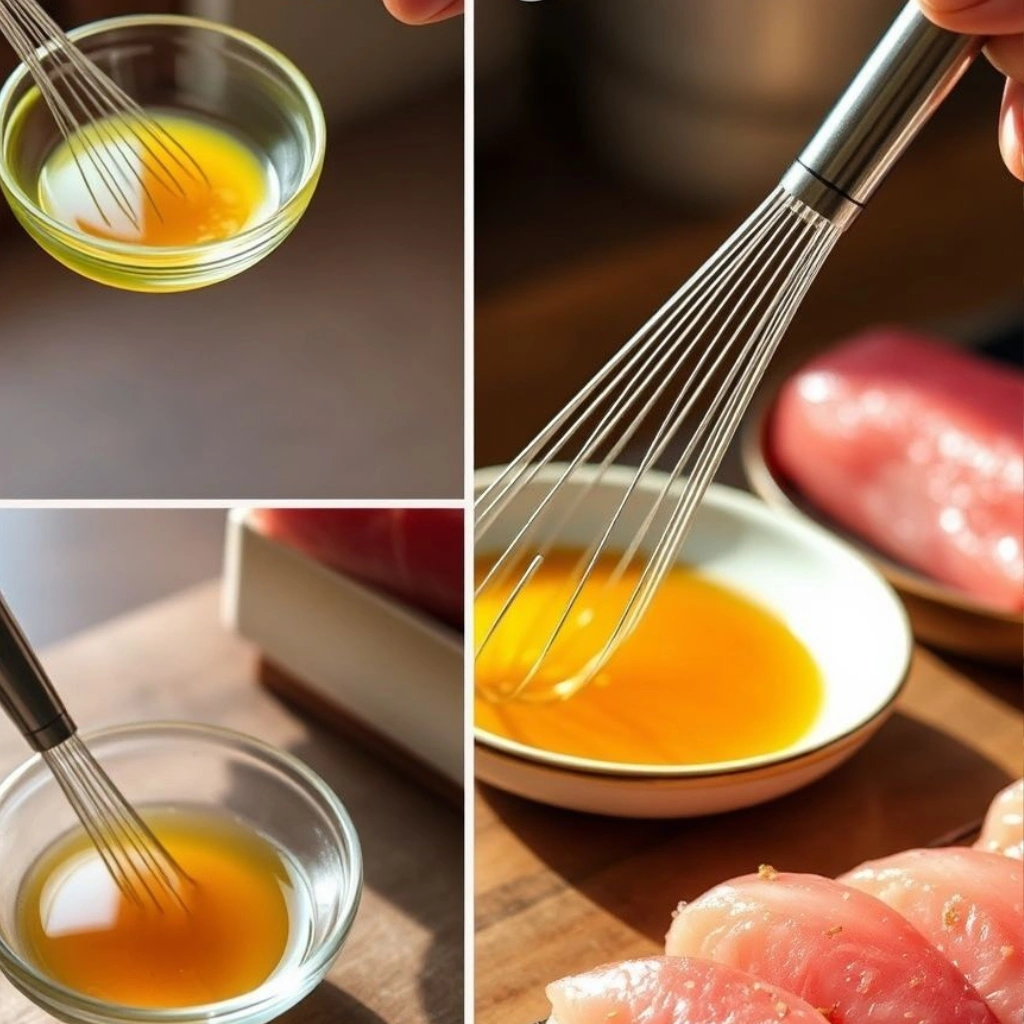
- First, combine all the ponzu sauce ingredients in a small bowl.
- Then, whisk them together thoroughly until well incorporated.
- After mixing, let the sauce sit for at least 15 minutes to allow the flavors to meld.
- Meanwhile, you can prepare the tuna while the sauce develops its flavors.
Preparing the Tuna
- To begin, pat the tuna loin dry with paper towels.
- Next, season the tuna lightly with salt on all sides.
- Subsequently, spread the sesame seeds on a plate and gently press the tuna into them, coating all sides.
- Then, heat a cast-iron skillet over high heat until it’s very hot.
- Afterwards, add the sesame oil to the skillet.
- When the oil is shimmering, carefully place the tuna in the pan.
- Sear each side for just 30 seconds (yes, it’s that quick!).
- Finally, immediately transfer the tuna to a cutting board.

Slicing and Serving
- Allow the tuna to rest for 2-3 minutes before slicing.
- Next, using a very sharp knife, slice the tuna against the grain into ¼-inch thick pieces.
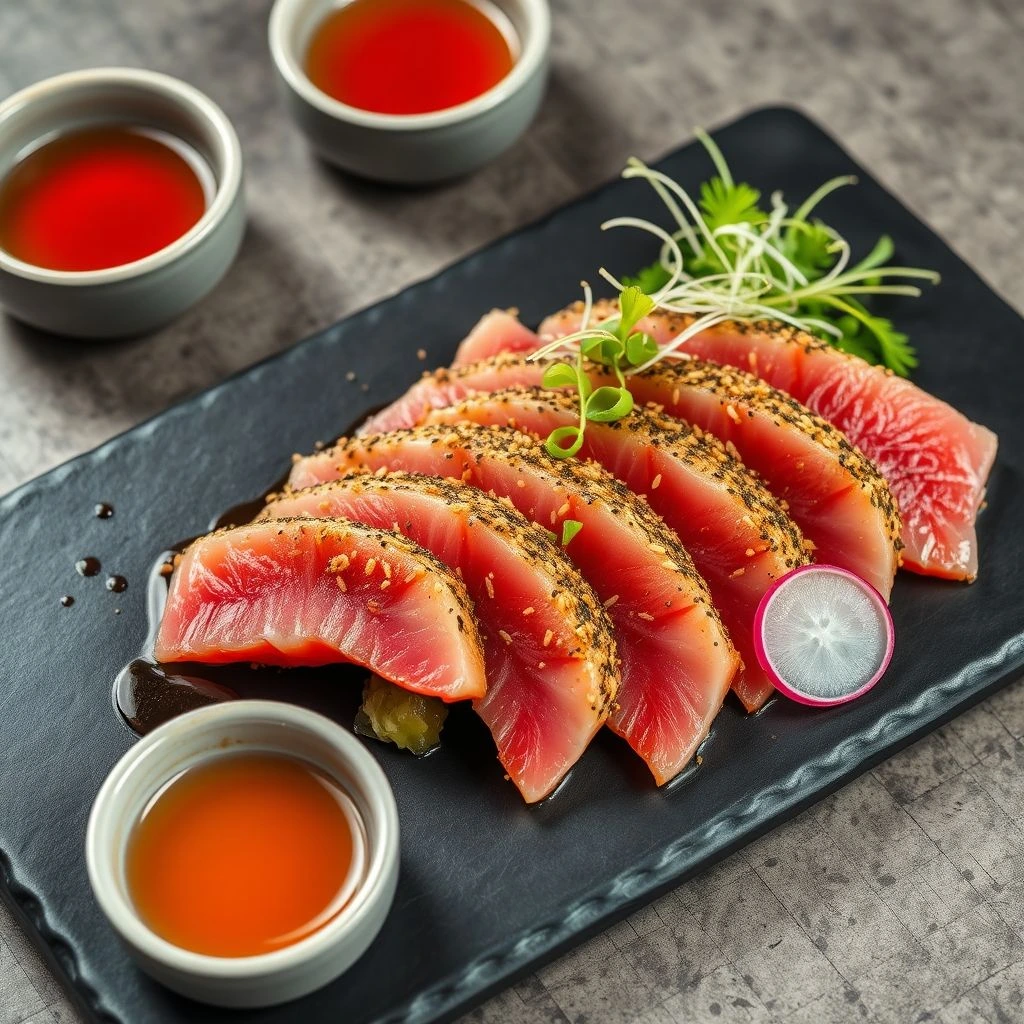
- Then, arrange the slices beautifully on a serving plate.
- Drizzle some of the prepared ponzu sauce over the tuna.
- Finally, garnish with sliced green onions, microgreens, and radish slices.
- Serve immediately with the remaining ponzu sauce on the side.
Tips for Perfect Tuna Tataki
Making outstanding tuna tataki with ponzu sauce relies on a few key techniques:
Getting the Perfect Sear
The most crucial part of tuna tataki with ponzu sauce is achieving the right sear. Therefore, follow these tips:
- Make sure your pan is extremely hot before adding the tuna
- Don’t move the tuna while it’s searing
- Keep the cooking time very short – overcooking is the enemy
- Use a timer if needed to ensure precise cooking times
Knife Skills Matter
For the most beautiful presentation:
- Use the sharpest knife you have
- Slice the tuna in one smooth motion rather than sawing
- Clean the knife between cuts for the cleanest edges
- Aim for consistent thickness in your slices
Serving Suggestions
Tuna tataki with ponzu sauce works wonderfully as:
- An elegant appetizer for a dinner party
- Part of a Japanese-inspired meal
- A light, protein-rich lunch
- The centerpiece of a homemade sushi bowl
Make-Ahead Options
Although tuna tataki with ponzu sauce is best enjoyed immediately after preparation, you can:
- Prepare the ponzu sauce up to 3 days in advance and store it in the refrigerator
- Toast the sesame seeds ahead of time
- Prepare all garnishes and store them properly until serving time
However, the actual searing and slicing of the tuna should happen just before serving for the freshest taste and optimal texture.
Health Benefits
This tuna tataki with ponzu sauce isn’t just delicious—it’s nutritious too! Tuna provides:
- High-quality protein
- Omega-3 fatty acids for heart and brain health
- B vitamins, especially B12
- Minerals including selenium and magnesium
Furthermore, the citrus in the ponzu sauce adds vitamin C, while the sesame seeds contribute healthy fats and minerals.
Common Questions About Tuna Tataki
Can I use frozen tuna?
Yes, you can use frozen sashimi-grade tuna. In fact, most “fresh” tuna has actually been previously frozen to kill potential parasites. Just make sure to thaw it properly in the refrigerator overnight.
Is it safe to eat raw tuna?
When you purchase sashimi-grade tuna from reputable sources, it’s generally safe for raw consumption. This grade of fish has been handled with specific food safety protocols. Nevertheless, pregnant women, young children, elderly individuals, or those with compromised immune systems might want to avoid raw fish.
Can I substitute the ponzu sauce?
While traditional ponzu complements the tuna perfectly, you could alternatively use a simple soy sauce and citrus juice mixture, or even a light vinaigrette if you prefer.
Conclusion
Creating restaurant-quality tuna tataki with ponzu sauce at home is surprisingly achievable and immensely rewarding. With just a few quality ingredients and proper technique, you can impress your guests with this elegant Japanese appetizer. Most importantly, the contrast between the seared exterior and the velvety raw center of the tuna, complemented by the tangy ponzu sauce, creates a flavor experience that’s truly memorable.
The next time you’re craving something special, skip the restaurant reservation and try making tuna tataki with ponzu sauce in your own kitchen. Consequently, you might discover a new signature dish that becomes your go-to for special occasions!
How to Make Tuna Tataki with Ponzu Sauce at Home
Description
Recreate the elegance of Japanese dining at home with Tuna Tataki and Ponzu Sauce—a lightly seared, tender tuna dish paired with a tangy citrus-soy sauce that balances richness with refreshing brightness.
Ingredients You'll Need
For the Tuna Tataki:

For the Ponzu Sauce:
For Garnish:
Step-by-Step Instructions
Preparing the Ponzu Sauce
- First, combine all the ponzu sauce ingredients in a small bowl.
- Then, whisk them together thoroughly until well incorporated.
- After mixing, let the sauce sit for at least 15 minutes to allow the flavors to meld.
- Meanwhile, you can prepare the tuna while the sauce develops its flavors.
Preparing the Tuna
- To begin, pat the tuna loin dry with paper towels.
- Next, season the tuna lightly with salt on all sides.
- Subsequently, spread the sesame seeds on a plate and gently press the tuna into them, coating all sides.
- Then, heat a cast-iron skillet over high heat until it’s very hot.
- Afterwards, add the sesame oil to the skillet.
- When the oil is shimmering, carefully place the tuna in the pan.
- Sear each side for just 30 seconds (yes, it’s that quick!).
- Finally, immediately transfer the tuna to a cutting board.
Slicing and Serving
- Allow the tuna to rest for 2-3 minutes before slicing.
- Next, using a very sharp knife, slice the tuna against the grain into ¼-inch thick pieces.
- Then, arrange the slices beautifully on a serving plate.
- Drizzle some of the prepared ponzu sauce over the tuna.
- Finally, garnish with sliced green onions, microgreens, and radish slices.
- Serve immediately with the remaining ponzu sauce on the side.
Nutrition Facts
Servings 4
- Amount Per Serving
- Calories 230kcal
- % Daily Value *
- Total Fat 16g25%
- Saturated Fat 2g10%
- Cholesterol 40mg14%
- Total Carbohydrate 6g2%
- Dietary Fiber 1g4%
- Sugars 3g
- Protein 21g42%
- Vitamin C 10 mg
- Calcium 35 mg
- Iron 1 mg
* Percent Daily Values are based on a 2,000 calorie diet. Your daily value may be higher or lower depending on your calorie needs.