

Introduction
Have you ever tasted a dish that immediately transports you to another country? Hungarian stuffed cabbage is definitely one of those magical meals. This beloved Eastern European comfort food combines tender cabbage leaves wrapped around a savory meat and rice filling, then simmered slowly in a rich tomato-based sauce. Moreover, this traditional dish has been passed down through generations, with each family adding their own special touch.
I first experienced authentic Hungarian stuffed cabbage at my friend’s grandmother’s house, and I’ve been perfecting my own version ever since. Therefore, I’m excited to share this treasured recipe with you today.
If you love old-fashioned European comfort food like this, you may also enjoy traditional German beef rouladen, another classic dinner rooted in family tradition.




The History Behind Hungarian Stuffed Cabbage
Hungarian stuffed cabbage, known locally as “Töltött Káposzta,” has deep roots in Hungarian cuisine. Firstly, this dish dates back several centuries and reflects Hungary’s agricultural heritage. Furthermore, cabbage has always been an important crop in the region, making it a staple in many traditional dishes.
Meanwhile, variations of stuffed cabbage exist across Eastern Europe, but the Hungarian version stands out for its distinctive paprika-infused flavor and the use of sauerkraut. In addition, this hearty meal is often served during holidays and special family gatherings, especially in winter months when comfort food is most appreciated.
Ingredients for Authentic Hungarian Stuffed Cabbage
To begin with, gathering the right ingredients ensures your Hungarian stuffed cabbage will taste authentic. Here’s what you’ll need:
For the Cabbage and Filling:
- 1 large head of cabbage (about 2-3 pounds)
- 1 pound ground pork
- 1/2 pound ground beef
- 1 cup uncooked rice
- 1 large onion, finely chopped
- 3 cloves garlic, minced
- 2 eggs
- 2 tablespoons Hungarian sweet paprika
- 1 teaspoon salt
- 1/2 teaspoon black pepper
- 1/4 teaspoon caraway seeds (optional)
For the Sauce:
- 1 pound sauerkraut, rinsed and drained
- 1 can (28 oz) crushed tomatoes
- 2 tablespoons tomato paste
- 2 bay leaves
- 1 tablespoon Hungarian sweet paprika
- Salt and pepper to taste
- 2 tablespoons vegetable oil
- 3 cups chicken or vegetable broth
Step-by-Step Preparation
Consequently, let’s break down the cooking process into manageable steps:
Preparing the Cabbage
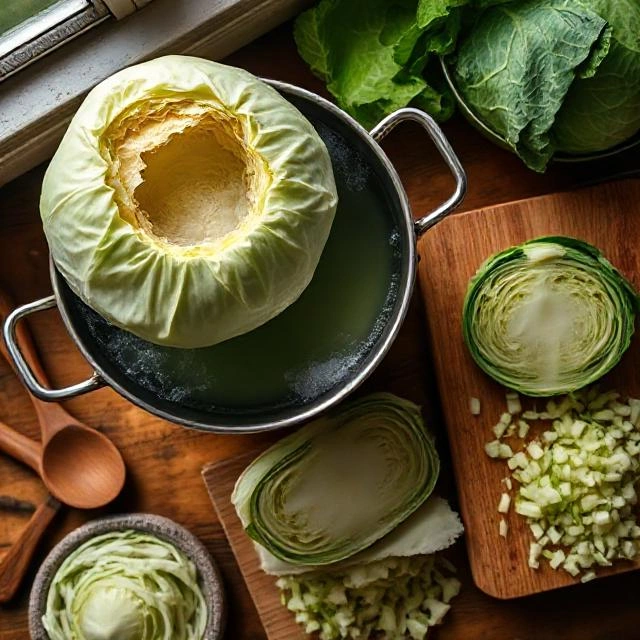
- First of all, core the cabbage and place it in a large pot of boiling water.
- After that, as the outer leaves soften, carefully peel them off one by one.
- Meanwhile, continue this process until you have 12-16 large leaves.
- Subsequently, trim the thick center rib from each leaf to make rolling easier.
- Furthermore, chop any remaining cabbage for later use in the sauce.
Making the Filling
- To begin with, sauté the onion in a tablespoon of oil until translucent.
- Then, add the garlic and cook for another minute.
- Meanwhile, in a large bowl, combine ground pork, ground beef, rice, eggs, paprika, salt, pepper, and caraway seeds if using.
- Additionally, add the cooled onion-garlic mixture and mix thoroughly but gently.

Rolling the Cabbage Leaves
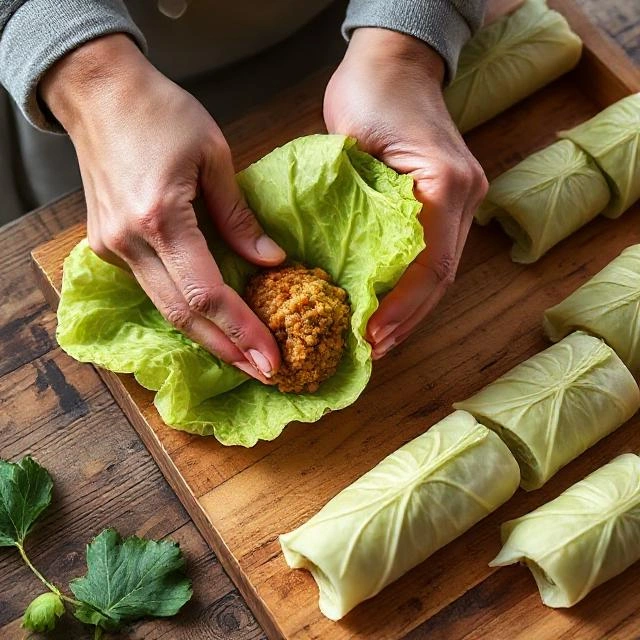
- In the meantime, place about 1/4 cup of filling near the stem end of each cabbage leaf.
- Then, fold the sides of the leaf over the filling.
- Subsequently, roll the leaf up, tucking in the sides as you go.
- As a result, you’ll have neat cabbage rolls with the filling securely enclosed.
Preparing the Cooking Pot
- First, spread half the sauerkraut in the bottom of a large Dutch oven or heavy pot.
- After that, place the cabbage rolls seam-side down on top of the sauerkraut.
- Furthermore, arrange them snugly so they don’t unroll during cooking.
- Next, cover with remaining sauerkraut and any chopped cabbage from earlier.
- Then, mix crushed tomatoes, tomato paste, paprika, bay leaves, salt, and pepper.
- Finally, pour this sauce over everything, adding enough broth to just cover the rolls.

Cooking Method
- To start with, bring the pot to a gentle boil on the stovetop.
- After that, reduce heat to low, cover, and simmer for about 2 hours.
- As a result, the cabbage will become tender and the flavors will meld beautifully.
- Consequently, check occasionally to ensure there’s still enough liquid in the pot.
- Finally, remove from heat and let stand for 20 minutes before serving.

Serving Suggestions
Hungarian stuffed cabbage tastes even better when served with the right accompaniments. For instance, a dollop of sour cream on top provides a creamy contrast to the tangy cabbage. Additionally, crusty bread makes an excellent side for sopping up the delicious sauce.
Interestingly, this dish improves with time, making it perfect for preparing ahead. In fact, many Hungarian families make it a day in advance, allowing the flavors to develop overnight.
Tips for Perfect Hungarian Stuffed Cabbage
For one thing, don’t rush the cooking process. Indeed, slow simmering is key to developing the rich flavors of authentic Hungarian stuffed cabbage.
Meanwhile, if the cabbage leaves are too stiff to roll easily, you can freeze the whole head of cabbage overnight and then thaw it. Surprisingly, this makes the leaves pliable without having to boil them.
Moreover, adjust the sourness to your taste. For example, if you prefer a milder flavor, rinse the sauerkraut more thoroughly or use less.
Variations on Hungarian Stuffed Cabbage
While staying true to tradition, you can personalize your Hungarian stuffed cabbage in several ways:
- For instance, some regions add smoked meat or bacon to enhance the flavor.
- Additionally, you can substitute ground turkey for a lighter version.
- Furthermore, vegetarians might enjoy a filling made with mushrooms, lentils, and barley.
- Similarly, the sauce can be adjusted to be more or less tangy depending on your preference.
If you enjoy this hearty Eastern European dish, you might also appreciate our Herb Crusted Rack of Lamb, another traditional comfort food from Western Europe perfect for special occasions!
Preserving and Storing
Hungarian stuffed cabbage freezes remarkably well. Therefore, consider making a double batch and freezing portions for future meals. In addition, the flavor actually improves after freezing and reheating.
For storage, keep refrigerated for up to 5 days or freeze for up to 3 months. When reheating, add a little broth if needed to maintain the sauce consistency.
Why Hungarian Stuffed Cabbage Remains Popular
Hungarian stuffed cabbage continues to be beloved worldwide because it represents the perfect comfort food. Specifically, it’s filling, flavorful, economical, and deeply satisfying. As a result, it remains a favorite for family gatherings and cold-weather meals.
Significantly, the dish also showcases how humble ingredients can be transformed into something extraordinary. In the same way, it demonstrates how traditional recipes connect us to our cultural heritage.
Conclusion
Mastering authentic Hungarian stuffed cabbage is a culinary achievement worth celebrating. After following this detailed guide, you’ll be able to create this classic dish with confidence. Above all, you’ll be preserving a cherished culinary tradition that has brought comfort to countless families across generations.
To sum up, the combination of tender cabbage, seasoned meat filling, and tangy sauce creates a harmonious dish that’s greater than the sum of its parts. Therefore, don’t be surprised if this becomes a requested favorite in your home!
This kind of slow-cooked comfort is also found in dishes like Italian Zuppa di Fagioli, a rustic bean soup perfect for cozy dinners.
Finally, remember that cooking traditional dishes like Hungarian stuffed cabbage is about more than just following a recipe—it’s about connecting with history and creating memories around your table.
How to Make Authentic Hungarian Stuffed Cabbage
Description
Experience the comforting flavors of Eastern Europe with authentic Hungarian stuffed cabbage. Tender cabbage leaves envelop a savory meat and rice filling, simmered in a rich tomato sauce. Passed down through generations, this traditional dish brings warmth, nostalgia, and a taste of heritage to every bite.
Ingredients:
For the Cabbage and Filling:


For the Sauce:

Instructions
Preparing the Cabbage
- First of all, core the cabbage and place it in a large pot of boiling water.
- After that, as the outer leaves soften, carefully peel them off one by one.
- Meanwhile, continue this process until you have 12-16 large leaves.
- Subsequently, trim the thick center rib from each leaf to make rolling easier.
- Furthermore, chop any remaining cabbage for later use in the sauce.
Making the Filling
- To begin with, sauté the onion in a tablespoon of oil until translucent.
- Then, add the garlic and cook for another minute.
- Meanwhile, in a large bowl, combine ground pork, ground beef, rice, eggs, paprika, salt, pepper, and caraway seeds if using.
- Additionally, add the cooled onion-garlic mixture and mix thoroughly but gently.
Rolling the Cabbage Leaves
- In the meantime, place about 1/4 cup of filling near the stem end of each cabbage leaf.
- Then, fold the sides of the leaf over the filling.
- Subsequently, roll the leaf up, tucking in the sides as you go.
- As a result, you'll have neat cabbage rolls with the filling securely enclosed.
Preparing the Cooking Pot
- First, spread half the sauerkraut in the bottom of a large Dutch oven or heavy pot.
- After that, place the cabbage rolls seam-side down on top of the sauerkraut.
- Furthermore, arrange them snugly so they don't unroll during cooking.
- Next, cover with remaining sauerkraut and any chopped cabbage from earlier.
- Then, mix crushed tomatoes, tomato paste, paprika, bay leaves, salt, and pepper.
- Finally, pour this sauce over everything, adding enough broth to just cover the rolls.
Cooking Method
- To start with, bring the pot to a gentle boil on the stovetop.
- After that, reduce heat to low, cover, and simmer for about 2 hours.
- As a result, the cabbage will become tender and the flavors will meld beautifully.
- Consequently, check occasionally to ensure there's still enough liquid in the pot.
- Finally, remove from heat and let stand for 20 minutes before serving.
Nutrition Facts
Servings 6
- Amount Per Serving
- Calories 400kcal
- % Daily Value *
- Total Fat 20g31%
- Total Carbohydrate 28g10%
- Dietary Fiber 5g20%
- Sugars 7g
- Protein 24g48%
- Vitamin C 45 mg
- Calcium 80 mg
- Iron 3 mg
* Percent Daily Values are based on a 2,000 calorie diet. Your daily value may be higher or lower depending on your calorie needs.
Note
- Dish tastes even better the next day
- Can be frozen for up to 3 months
- Serve with sour cream and crusty bread