
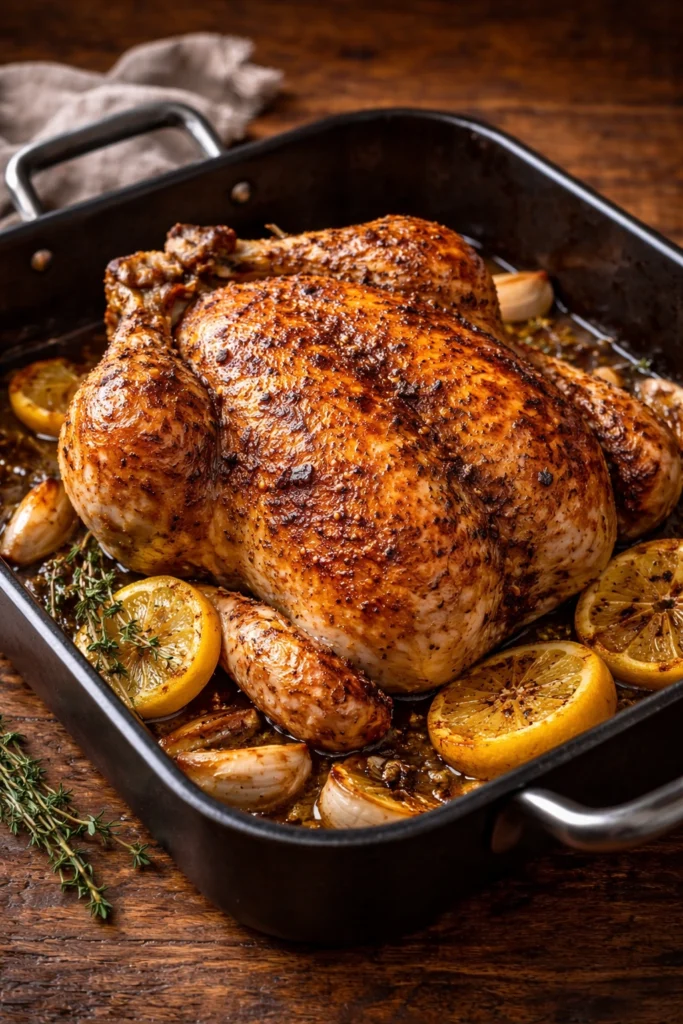

Roast chicken is a timeless classic that never fails to impress with its simplicity and succulence. From its origins in traditional home cooking to gracing the tables of fine dining establishments, this dish holds a special place in the hearts of chefs and food enthusiasts alike. The art of roasting a whole chicken to perfection involves a delicate balance of technique, timing, and seasoning. In this step-by-step guide, I will walk you through how to make a classic roast chicken that’s juicy on the inside, with crispy, golden skin that crackles with each bite.
If you’re a fan of quick chicken dinners, you may also enjoy options like easy chicken stir-fry for busy weeknights.
Origin and History
Roast chicken has a rich history that dates back centuries, with roots in various culinary traditions around the world. In European cuisine, roast chicken has been a staple dish for celebratory feasts and family gatherings. It symbolizes warmth, comfort, and togetherness. The French are famous for their “Poulet rôti,” where the bird is often roasted with herbs, garlic, and butter to create a luxurious and flavorful dish. In American cuisine, roast chicken is a beloved Sunday dinner tradition, often served alongside comforting sides such as creamy mashed potatoes to bring families together around the dining table.
Ingredients and Flavors
The beauty of roast chicken lies in its simplicity, allowing the natural flavors of the bird to shine through. To make a classic roast chicken, you will need a whole chicken, preferably organic or free-range for the best flavor and texture. Seasonings such as salt, pepper, garlic, and herbs like rosemary and thyme will enhance the chicken’s taste and aroma. A touch of olive oil or butter helps to crisp up the skin and seal in the juices, resulting in a moist and tender bird.
This comforting flavor profile is what also makes dishes like creamy garlic chicken so irresistible for special occasions.
Cooking Techniques
Achieving the perfect roast chicken requires attention to detail and a few key techniques. Preparing the chicken involves cleaning and patting it dry to ensure even cooking and crispy skin. Trussing the chicken, or tying the legs together with kitchen twine, helps the bird cook evenly and retain its shape. Roasting the chicken at a high temperature initially helps to crisp up the skin, while lowering the temperature allows the meat to cook through gently without drying out. Basting the chicken with its juices or a flavorful basting liquid during cooking adds moisture and depth of flavor to the dish. These classic roasting methods pair beautifully with hearty mains like classic beef meatloaf for a comforting, homestyle meal.
Frequently Asked Question:
How do I know when the roast chicken is done?
A common question when roasting a whole chicken is how to tell when it’s perfectly cooked. The best way to check for doneness is to insert a meat thermometer into the thickest part of the thigh. The internal temperature should read 165°F (74°C) when the chicken is fully cooked. Additionally, the juices should run clear when the chicken is pierced between the leg and the thigh. If you don’t have a meat thermometer, you can also wiggle the leg joint—if it moves easily, the chicken is likely done. Serve your perfectly roasted chicken with a cozy appetizer like cheesy beer fondue dip for a memorable meal.
In conclusion, mastering the art of making a classic roast chicken is a rewarding journey that yields a delicious and impressive dish. Whether you’re cooking for a special occasion or a simple family dinner, a well-executed roast chicken never fails to delight. So, roll up your sleeves, preheat that oven, and get ready to savor the aromas and flavors of a beautifully roasted bird. Your culinary adventure awaits—let’s roast!
How to Make Classic Roast Chicken Like a Pro (Step-by-Step!)
Description
Indulge in juicy, flavorful roast chicken with crispy skin— a classic dish that never fails to impress.
Ingredients
Ingredients





Instructions
Preparation
Prep the Chicken
Preheat the oven to 425°F (220°C). Rinse the chicken inside and out with cold water, then pat it dry with paper towels. Season the cavity with salt and pepper.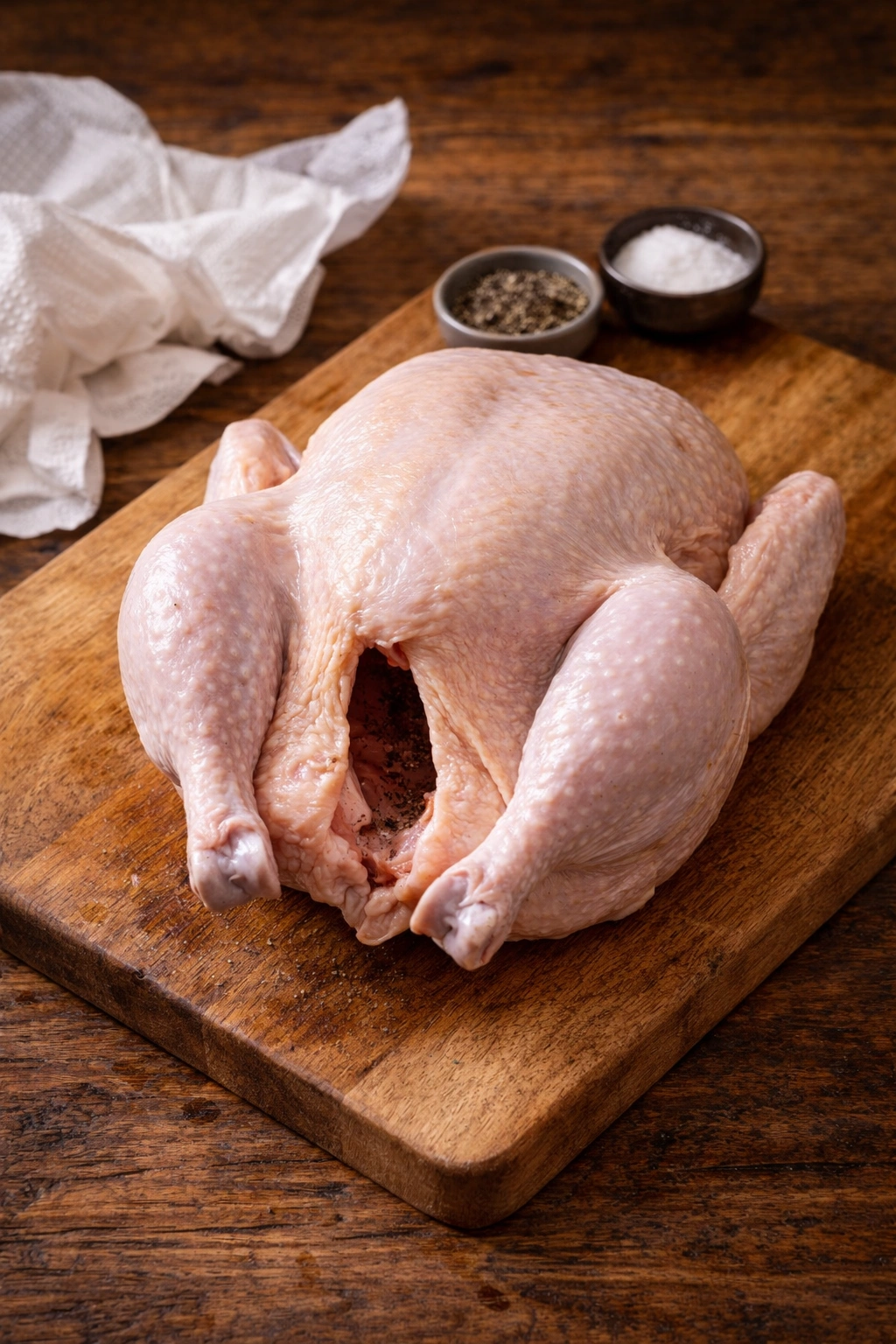 Make sure to remove any giblets from inside the chicken before proceeding.
Season the Chicken
Rub the chicken all over with softened butter. Season generously with salt, pepper, and your favorite herbs and spices. Tie the legs together with kitchen twine.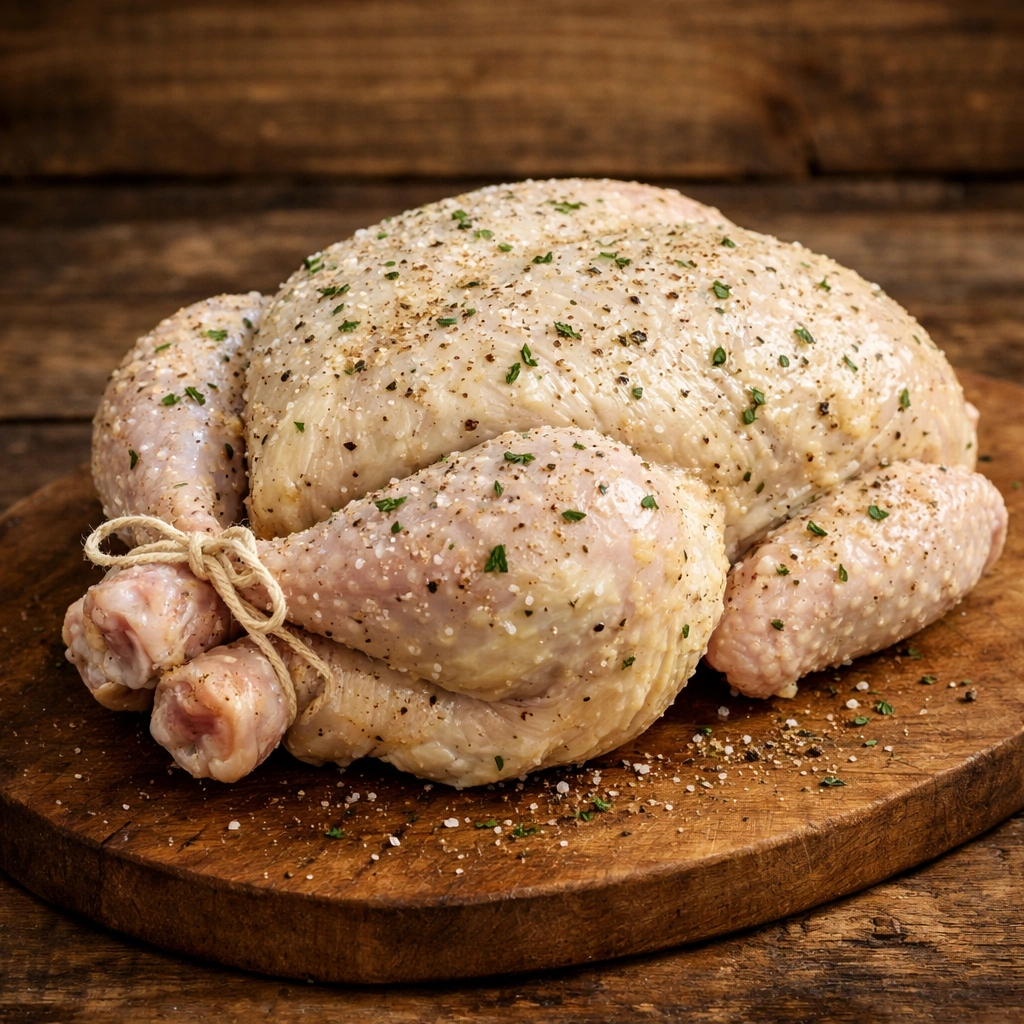 Don't be shy with the seasoning—it'll add flavor to the chicken as it roasts.
Roasting
Roast the Chicken
Place the chicken breast-side up in a roasting pan or cast-iron skillet. Roast in the preheated oven for about 1 hour to 1 hour 15 minutes, or until the internal temperature reaches 165°F (74°C).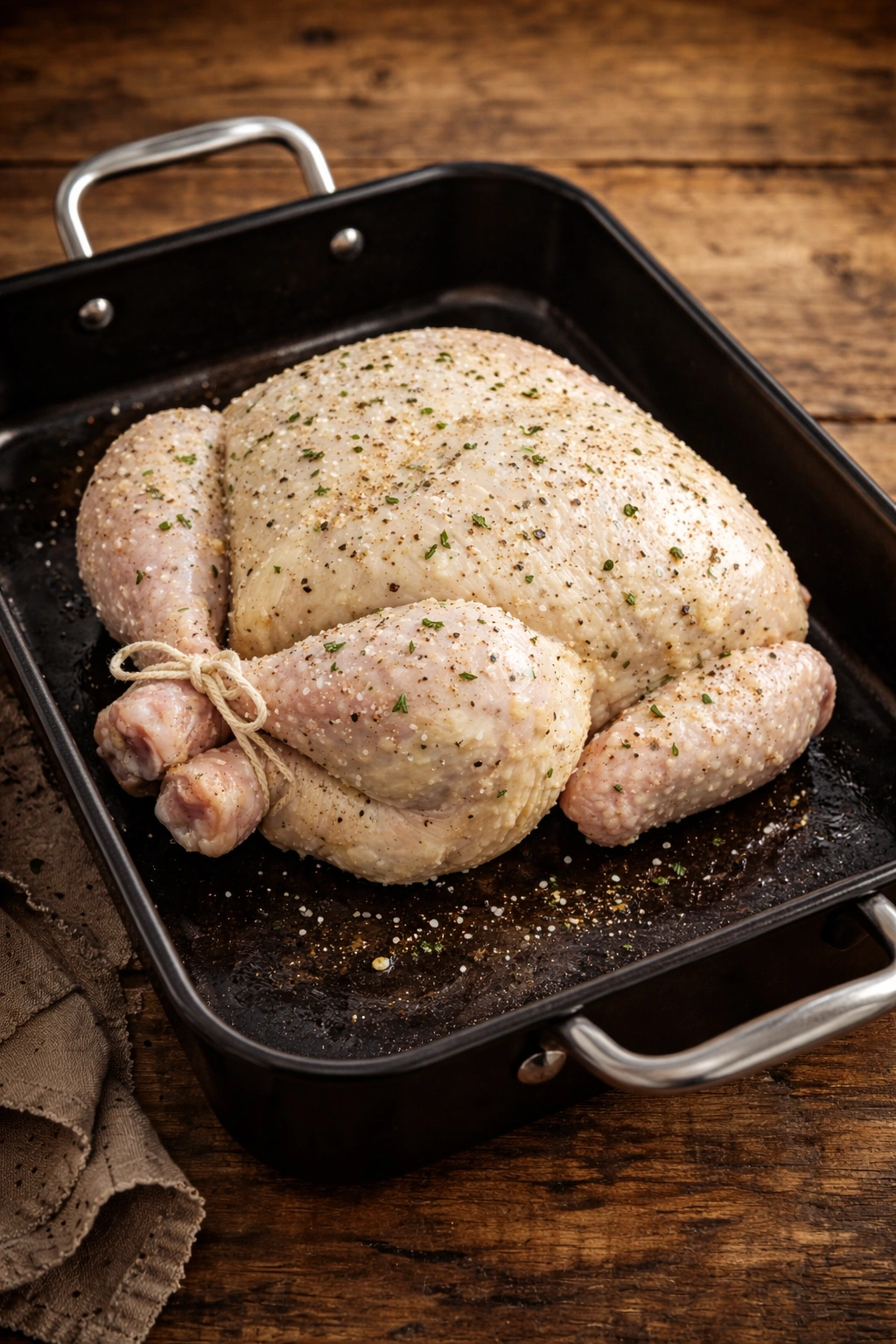 Baste the chicken with pan juices halfway through cooking for a golden, crispy skin.
Resting and Serving
Rest and Carve
Remove the chicken from the oven and let it rest for 10-15 minutes before carving. Cut into pieces and serve with your favorite sides.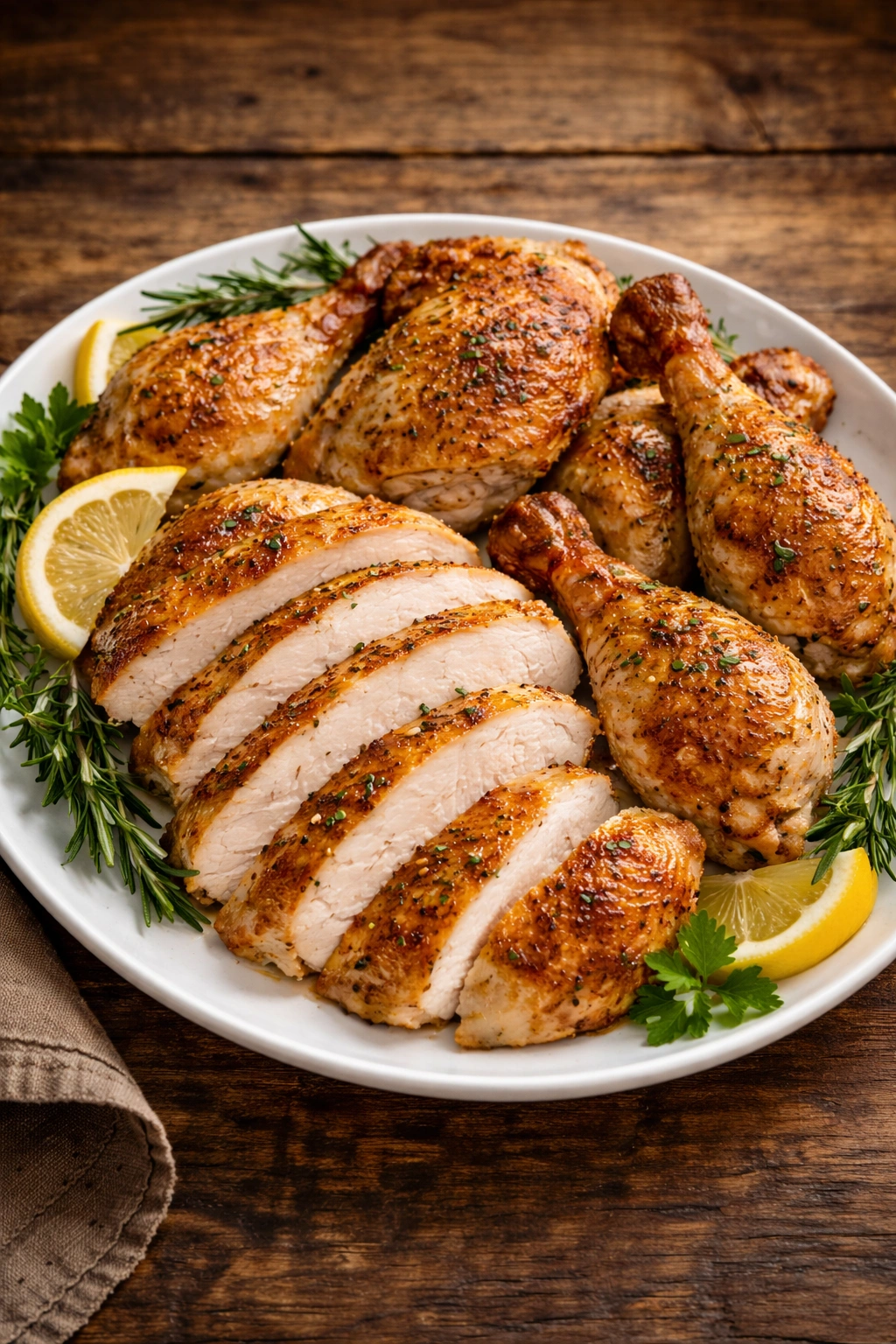 Resting allows the juices to redistribute, keeping the chicken moist and flavorful.

Nutrition Facts
Servings 4
- Amount Per Serving
- Calories 280kcal
- % Daily Value *
- Total Fat 19g30%
- Saturated Fat 6g30%
- Cholesterol 110mg37%
- Total Carbohydrate 1g1%
- Protein 26g52%
- Calcium 18 mg
- Iron 1.3 mg
* Percent Daily Values are based on a 2,000 calorie diet. Your daily value may be higher or lower depending on your calorie needs.
Note
- Make sure to pat the chicken dry with paper towels before seasoning to ensure crispy skin.
- Trussing the chicken helps it cook evenly and keeps the juices sealed in.
- Letting the chicken rest after roasting allows the juices to redistribute, keeping the meat tender.
- You can customize the seasoning with herbs like rosemary, thyme, or sage for extra flavor.
- For a golden brown and crispy skin, start roasting the chicken at a high temperature then lower it to finish cooking.
- Use a meat thermometer to ensure the chicken reaches an internal temperature of 165°F (74°C) for safe consumption.
- Leftover roast chicken can be used in sandwiches, salads, or soups for delicious meals throughout the week.