

Introduction
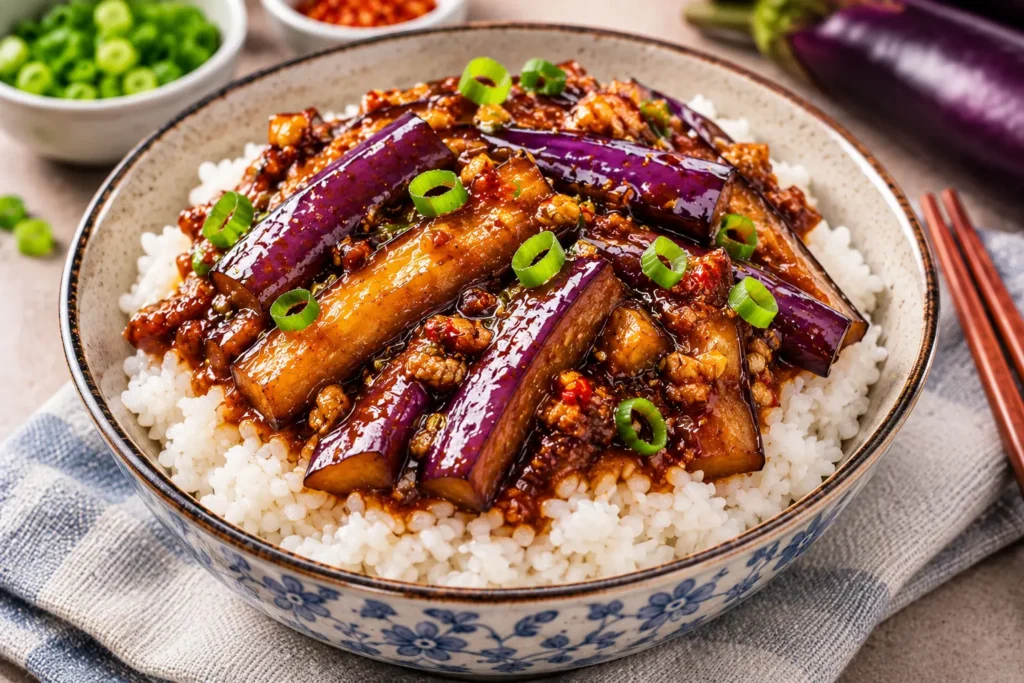
Chinese braised eggplant is a delicious vegetable dish featuring tender eggplant pieces coated in a rich, savory-sweet garlic soy sauce. With fragrant garlic, fresh ginger, scallions, and a touch of chili, this Chinese eggplant recipe transforms a simple vegetable into a flavorful side dish or satisfying vegetarian meal.
The best part? You can make this homemade Chinese braised eggplant recipe in about 40 minutes using simple ingredients. The eggplant is first lightly stir-fried until golden, then simmered in a flavorful sauce until tender and glossy. Serve it over steamed rice for an easy weeknight dinner or alongside your favorite Chinese-inspired dishes.
What Makes Chinese Braised Eggplant Special?
What makes Chinese braised eggplant so delicious is the way it absorbs the bold flavors of its sauce while becoming soft and tender. Chinese or Japanese eggplants are especially suitable because their thin skins and delicate texture allow them to cook evenly and soak up seasonings.

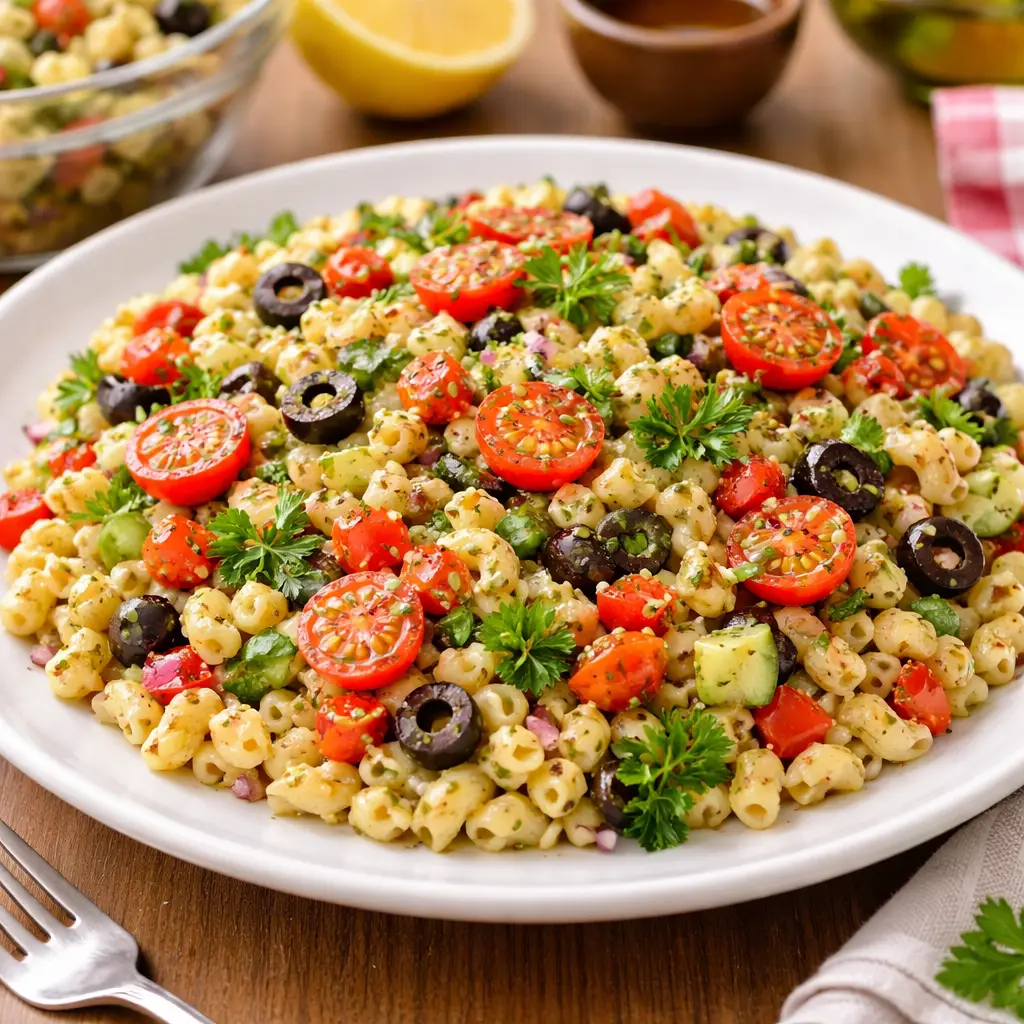






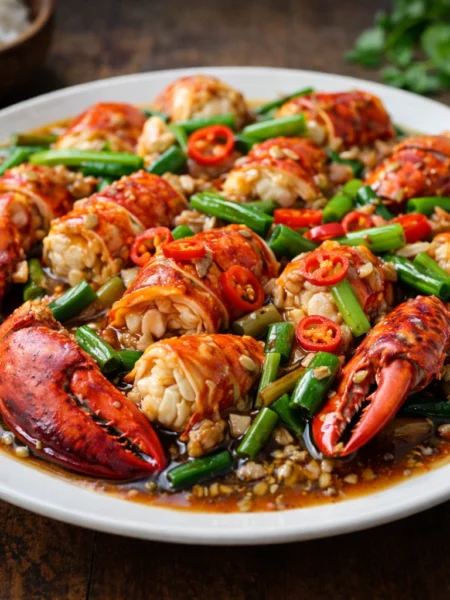
The sauce brings together garlic, ginger, scallions, soy sauce, dark soy sauce, Chinese rice wine, black vinegar, and a little sugar. Chili flakes add gentle heat, while a cornstarch slurry helps create a glossy sauce that clings to every piece of eggplant.
Unlike heavily battered or deep-fried eggplant dishes, this braised eggplant recipe uses a simple stir-frying and simmering method. The result is a comforting dish with a wonderful balance of savory, sweet, tangy, and spicy flavors.
Key Ingredients for Chinese Braised Eggplant
You only need a handful of everyday ingredients to prepare this flavorful Chinese eggplant recipe. Here are the main ingredients and why they matter.
- Chinese or Japanese eggplants: Choose eggplants with smooth, shiny skin and firm flesh. Their smaller size and tender texture make them ideal for braising.
- Garlic: Fresh minced garlic adds a fragrant, savory foundation to the sauce.
- Fresh ginger: Finely chopped ginger brings warmth and a fresh aromatic flavor.
- Scallions: Use the white parts for cooking and reserve the green parts for garnish.
- Soy sauce: Provides the main salty, savory flavor.
- Dark soy sauce: Adds a deeper color and richer appearance to the finished sauce.
- Chinese rice wine (Shaoxing wine): Gives the sauce extra depth and traditional Chinese-inspired flavor.
- Sugar: Balances the saltiness of the soy sauce and the tanginess of the vinegar.
- Black vinegar: Adds a pleasant tang that balances the rich sauce.
- Chili flakes: Bring a little heat; adjust the amount to your preference.
- Vegetable oil: Helps brown the eggplant and cook the aromatics.
- Water or chicken stock: Provides the liquid needed to simmer the eggplant.
- Cornstarch: Thickens the sauce so it coats the eggplant beautifully.
Ingredient tip: Choose slender Chinese or Japanese eggplants whenever possible. If you can only find regular globe eggplant, cut it into similarly sized pieces and allow a little extra cooking time if needed.
Step-by-Step Cooking Method
Making Chinese braised eggplant at home is easier than you might think. First, brown the eggplant, prepare the sauce, and then simmer everything together until tender. Follow these steps for a flavorful result.
1. Prepare the Eggplant
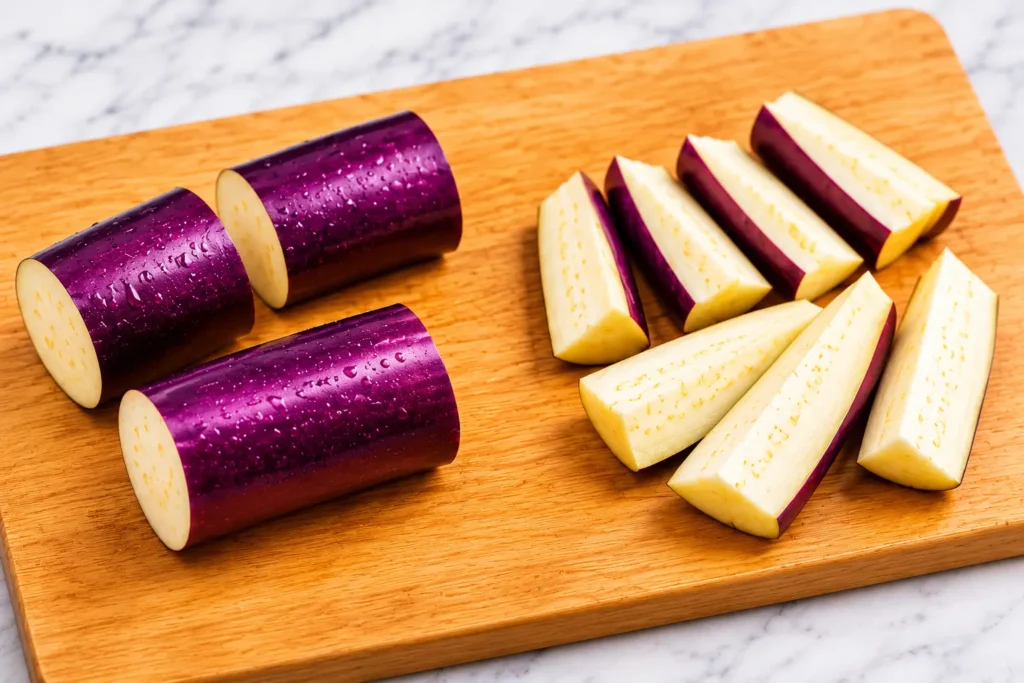
Wash and dry the eggplants, then cut them into approximately 3-inch-long pieces. Quarter each piece lengthwise to create evenly sized wedges.
If your eggplant tastes bitter, you can optionally soak the pieces in salted water for about 15 minutes. Drain and pat them thoroughly dry before cooking.
2. Stir-Fry the Eggplant
Heat the vegetable oil in a wok over medium-high heat until shimmering. Add the eggplant pieces in a single layer, working in batches if necessary.
Stir-fry for about 3–4 minutes, turning occasionally, until the pieces begin to soften and develop golden-brown edges. Remove the eggplant from the wok and set aside.
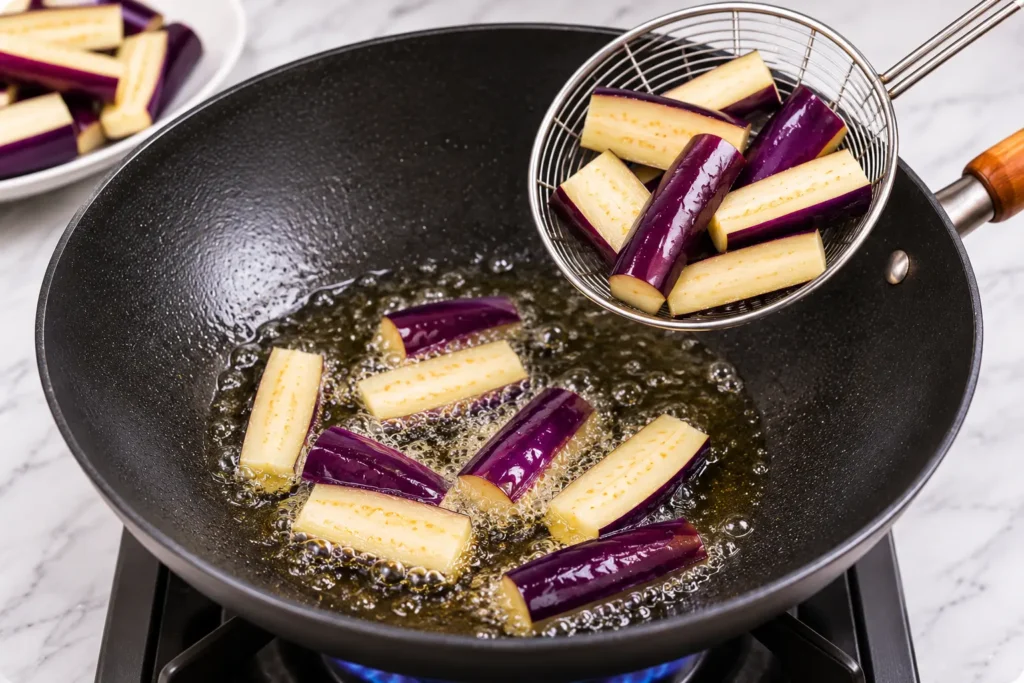
Cooking tip: Avoid overcrowding the wok. Cooking in batches helps the eggplant brown instead of steaming.
3. Cook the Garlic, Ginger, and Scallions
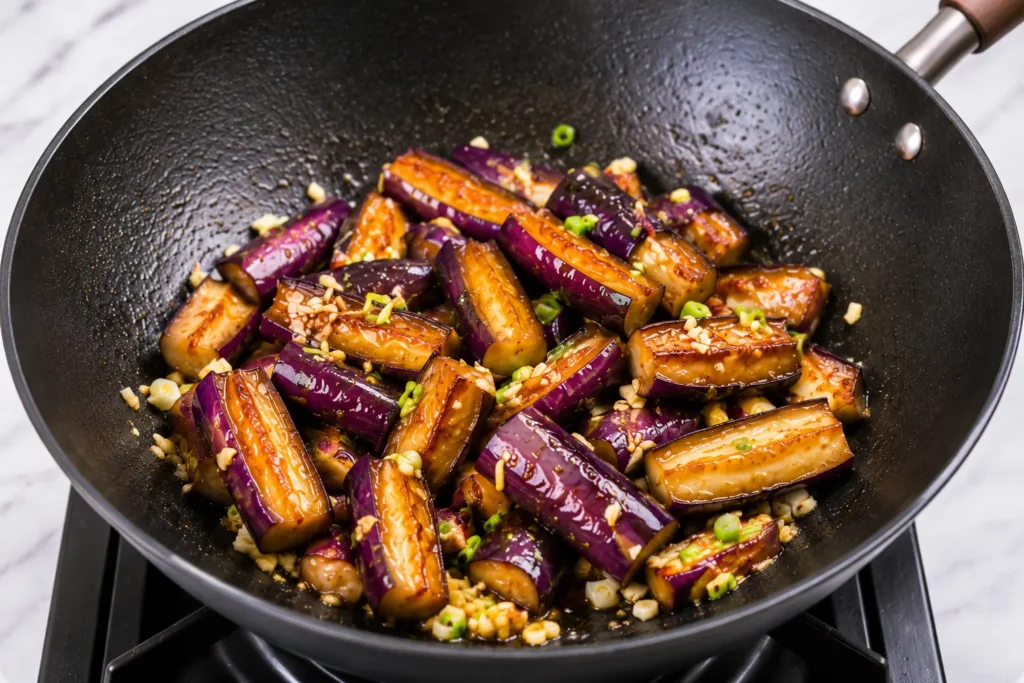
Add a little more vegetable oil to the same wok if needed. Add the minced garlic, chopped ginger, and white parts of the scallions.
Stir-fry for approximately 30 seconds, just until fragrant. Keep the ingredients moving so the garlic doesn’t burn.
Return the browned eggplant to the wok and gently toss it with the aromatics.
4. Prepare the Chinese Braising Sauce
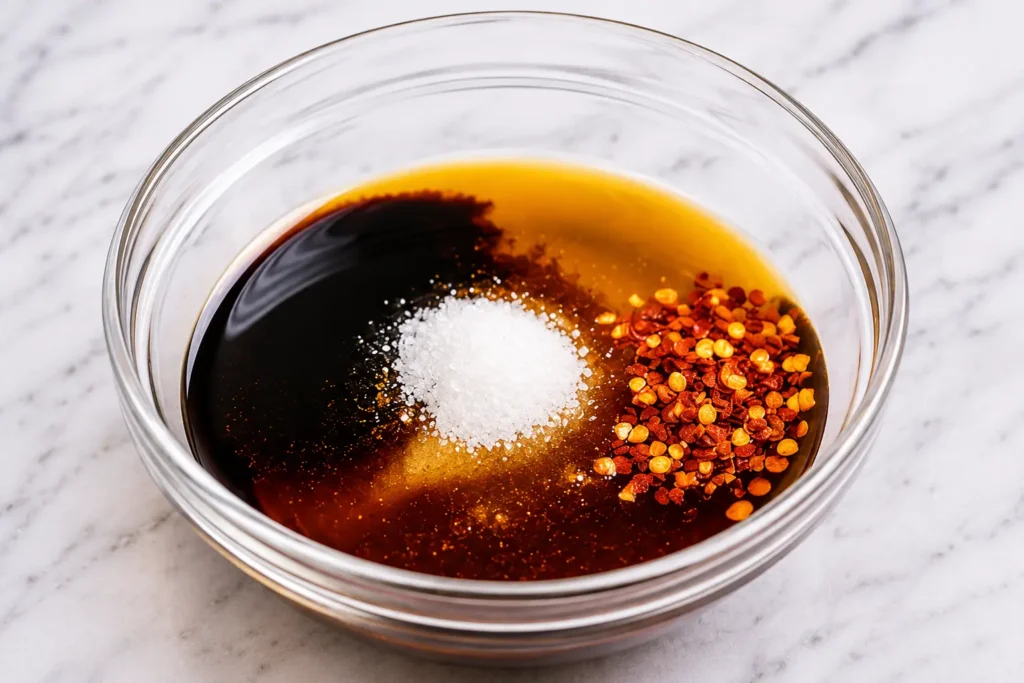
In a small bowl, whisk together the regular soy sauce, dark soy sauce, Shaoxing rice wine, sugar, black vinegar, and chili flakes.
Stir until the sugar is mostly dissolved and the ingredients are combined.
This savory-sweet mixture gives the Chinese braised eggplant its distinctive flavor and rich color.
5. Simmer the Eggplant in the Sauce
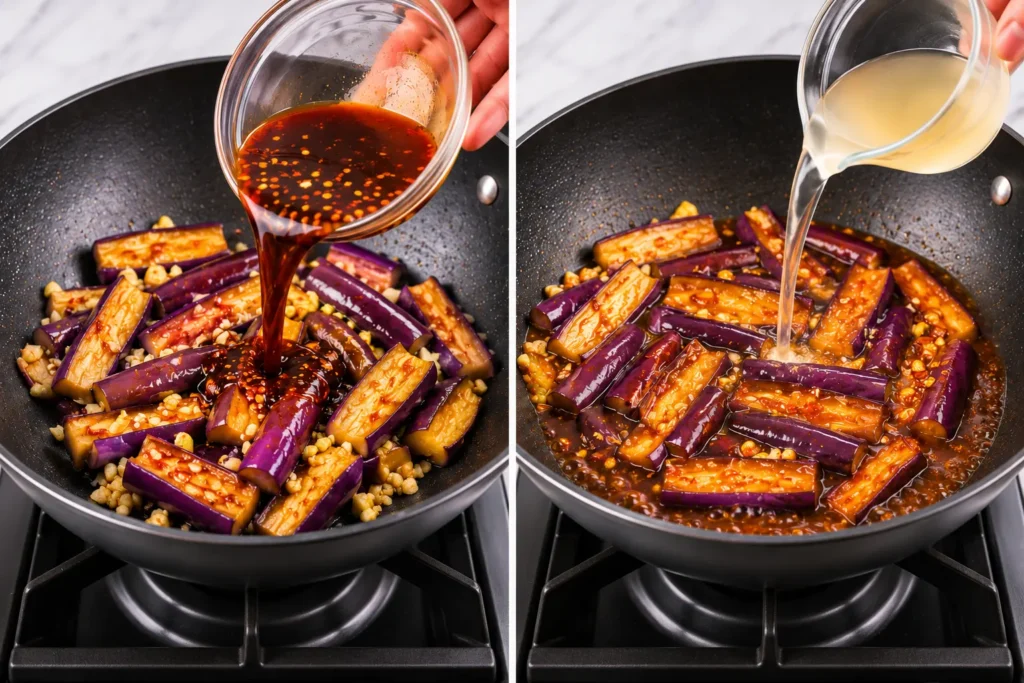
Pour the prepared sauce over the eggplant and toss gently to coat each piece.
Add the water or chicken stock, then reduce the heat to low. Cover the wok and simmer for 10–15 minutes, stirring gently once or twice, until the eggplant is completely tender.
Check the eggplant with a fork. It should be soft enough to pierce easily but should still hold its shape.
6. Thicken the Sauce and Serve
In a small bowl, mix the cornstarch with 1 tablespoon of water to make a smooth slurry.
Stir the slurry into the wok and cook briefly until the sauce thickens and becomes glossy. Gently toss the eggplant so the sauce coats all the pieces.
Turn off the heat and sprinkle the reserved green scallion parts over the top.
Serve your Chinese braised eggplant warm with steamed rice or your favorite Chinese-inspired main dishes.
Tips for the Best Chinese Braised Eggplant
A few simple techniques can make a big difference in the flavor and texture of this dish.
- Choose the right eggplant: Chinese or Japanese eggplants are ideal because they have thin skins, fewer seeds, and tender flesh.
- Cut evenly: Similar-sized pieces cook at roughly the same rate and absorb the sauce more evenly.
- Don’t overcrowd the wok: Stir-fry the eggplant in batches if necessary to encourage browning.
- Use fresh aromatics: Fresh garlic and ginger give the sauce a much brighter flavor than dried alternatives.
- Adjust the sauce: Add more chili flakes for heat or a little extra sugar if you prefer a sweeter flavor.
- Don’t overcook: Simmer until the eggplant is tender but still holds its shape.
- Add the cornstarch slurry gradually: This helps you control the sauce thickness and prevents lumps.
Serving Suggestions
Chinese braised eggplant is delicious served as part of a larger meal or enjoyed as a simple vegetarian main dish.
For a classic combination, serve it over steamed white rice or brown rice. The rice soaks up the savory garlic soy sauce and makes every bite satisfying.
You can also pair it with:
- Steamed jasmine rice: A simple side that balances the bold sauce.
- Vegetable fried rice: Makes a flavorful and filling meal.
- Mapo tofu: Adds another delicious Chinese-inspired dish to the table.
- Beef & Broccoli Stir-Fry: Serve this savory favorite alongside braised eggplant for a delicious Chinese-inspired dinner.
- Orange Chicken: For a more complete meal, serve it with braised eggplant and steamed rice for a delicious Chinese-inspired meal.
- Stir-fried vegetables: Try broccoli, bok choy, or green beans.
- Chinese noodle dishes: Serve alongside noodles for a comforting dinner.
- Easy Coconut Curry Noodles: Pair these creamy, flavorful noodles with braised eggplant for a satisfying Asian-inspired dinner.
If you prefer a vegetarian meal, use vegetable stock instead of chicken stock and pair the eggplant with steamed rice, vegetable fried rice, or stir-fried vegetables
Health Benefits of Chinese Braised Eggplant
Eggplant is a nutritious vegetable that adds fiber and beneficial plant compounds to your meals. This Chinese braised eggplant recipe also uses a simmering method rather than deep-frying the finished dish.
Here are a few nutritional highlights:
- Dietary fiber: Eggplant provides fiber that supports healthy digestion.
- Antioxidants: Eggplant contains plant compounds, including anthocyanins found in its purple skin.
- Vitamins and minerals: It contributes small amounts of nutrients such as vitamin B6, potassium, and manganese.
- A vegetable-rich meal: It is a tasty way to include more vegetables in your everyday cooking.
Keep in mind that the nutritional values of the finished dish depend on the ingredients and serving size. Soy sauce also contributes sodium, so choose a reduced-sodium variety if you want to limit salt.
Variations of Chinese Braised Eggplant
One of the best things about this Chinese eggplant recipe is how easily you can adjust it to suit your preferences.
- Spicy Sichuan-style eggplant: Add doubanjiang (fermented broad bean paste) and extra chili for a deeper, spicier flavor.
- Szechuan Chicken: Pair this spicy, savory chicken dish with the eggplant for a flavorful Sichuan-inspired meal.
- Vegetarian version: Use vegetable stock instead of chicken stock. Check the labels of your sauces to ensure they meet your dietary requirements.
- Eggplant with ground meat: Add ground pork or beef while cooking the garlic and ginger for a heartier variation.
- Sweeter eggplant: Increase the sugar slightly or add a little hoisin sauce for a sweeter, richer flavor.
- Milder version: Reduce or omit the chili flakes for a gentler sauce.
Storage and Reheating Tips
If you have leftovers, allow the Chinese braised eggplant to cool before transferring it to an airtight container.
- Refrigerator: Store in the refrigerator for up to 3 days.
- Reheating: Warm gently in a skillet over medium-low heat. Add a splash of water if the sauce has thickened too much.
- Microwave: Reheat in a microwave-safe dish in short intervals, stirring between intervals, until heated through.
The eggplant may become softer after storage, but the flavors often develop further as the sauce sits.
Frequently Asked Questions
What type of eggplant is best for Chinese braised eggplant?
Chinese or Japanese eggplants are the best choices because they have thin skins, fewer seeds, and tender flesh. Regular globe eggplant can also work, but you may need to adjust the cooking time.
Do I need to peel Chinese eggplant?
No. Chinese eggplant has relatively thin, tender skin, so peeling is usually unnecessary. Keeping the skin on also helps the pieces hold their shape while cooking.
Why is my braised eggplant mushy?
Eggplant can become mushy if it is overcooked or cut into very small pieces. Cut it into evenly sized chunks, brown it briefly, and simmer only until fork-tender.
Can I make Chinese braised eggplant without a wok?
Yes. A large skillet or nonstick frying pan works well. Choose a pan large enough to spread out the eggplant while stir-frying.
Is Chinese braised eggplant spicy?
It can be mildly spicy, depending on the amount of chili flakes used. You can reduce or omit them for a milder version.
What should I serve with Chinese braised eggplant?
Steamed rice is a classic choice. You can also serve it with fried rice, noodles, tofu, or other stir-fried vegetables.
Why You’ll Love This Chinese Braised Eggplant Recipe
This Chinese braised eggplant recipe turns a simple vegetable into a dish full of rich flavor and satisfying texture. The tender eggplant, fragrant garlic and ginger, and glossy soy-based sauce make every bite delicious.
It’s also easy to customize. Make it mild or spicy, serve it as a vegetable side, or enjoy it over rice as a vegetarian meal when prepared with vegetable stock.
If you’re looking for a flavorful way to cook eggplant, this homemade recipe is a wonderful addition to your dinner rotation.
Conclusion
Chinese braised eggplant is a comforting, flavorful dish that’s easy to prepare at home. With tender eggplant, fresh aromatics, and a savory-sweet sauce, it brings together simple ingredients in a delicious way.
Serve it with steamed rice for an easy weeknight meal, or add it to a larger Chinese-inspired dinner. Once you try this Chinese eggplant recipe, you may find yourself making it whenever eggplant is in season.
If you enjoy comforting homemade meals, you might also like this Hungarian Mushroom Paprika Soup, a creamy, flavorful dish perfect for cozy dinners.
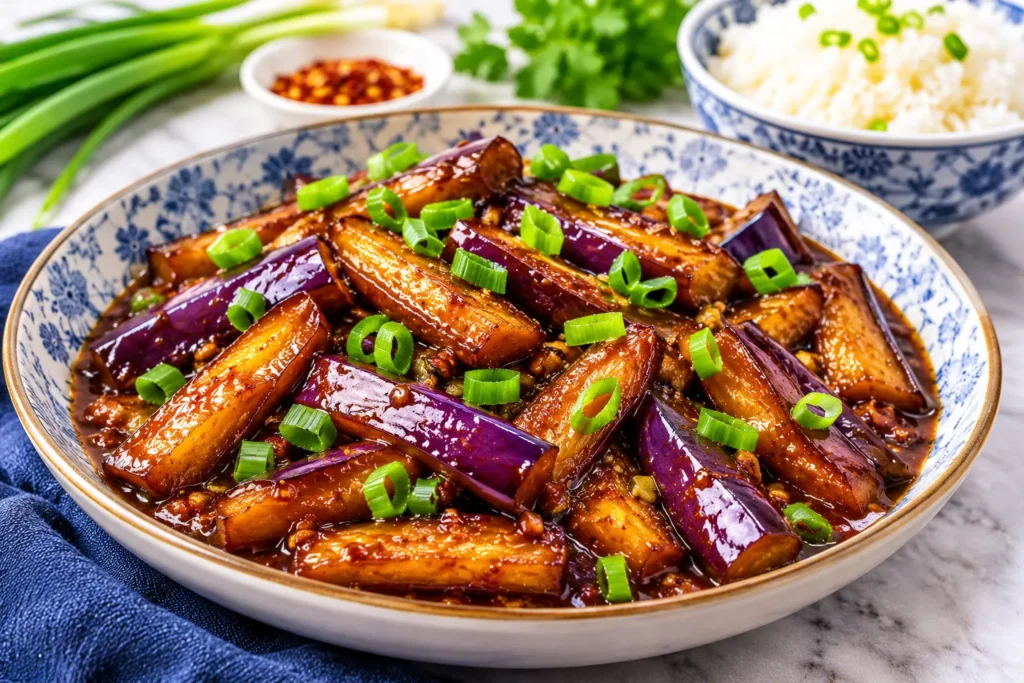
Chinese Braised Eggplant Recipe (Savory Garlic Soy Sauce)
Description
Tender Chinese braised eggplant simmered in a savory garlic soy sauce with ginger, scallions, and a touch of sweetness. Easy, flavorful, and perfect with rice.
Ingredients:



Instructions
Prepare the Eggplant
-
Wash, Cut, and Dry the Eggplant
Wash and dry the Chinese eggplants. Cut them into approximately 3-inch pieces, then quarter each piece lengthwise to create evenly sized wedges.
If the eggplant tastes bitter, optionally soak the pieces in salted water for 15 minutes. Drain and pat thoroughly dry.
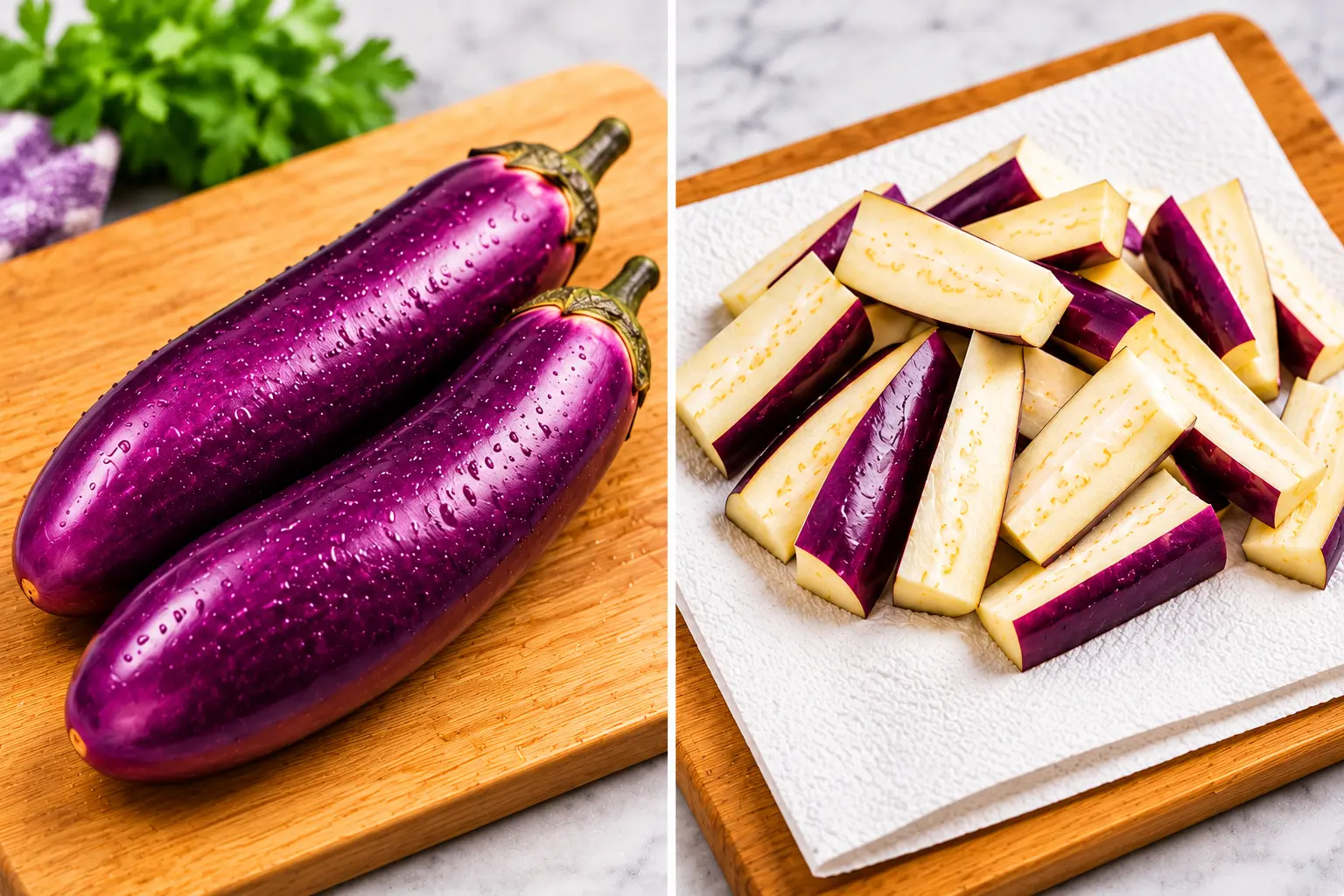 Dry eggplant browns better and absorbs less excess oil.
Stir-Fry the Eggplant
-
Brown the Eggplant Until Tender
Heat the vegetable oil in a wok over medium-high heat until shimmering. Add the eggplant in batches and stir-fry for 3–4 minutes, turning occasionally, until lightly browned and beginning to soften. Remove and set aside.
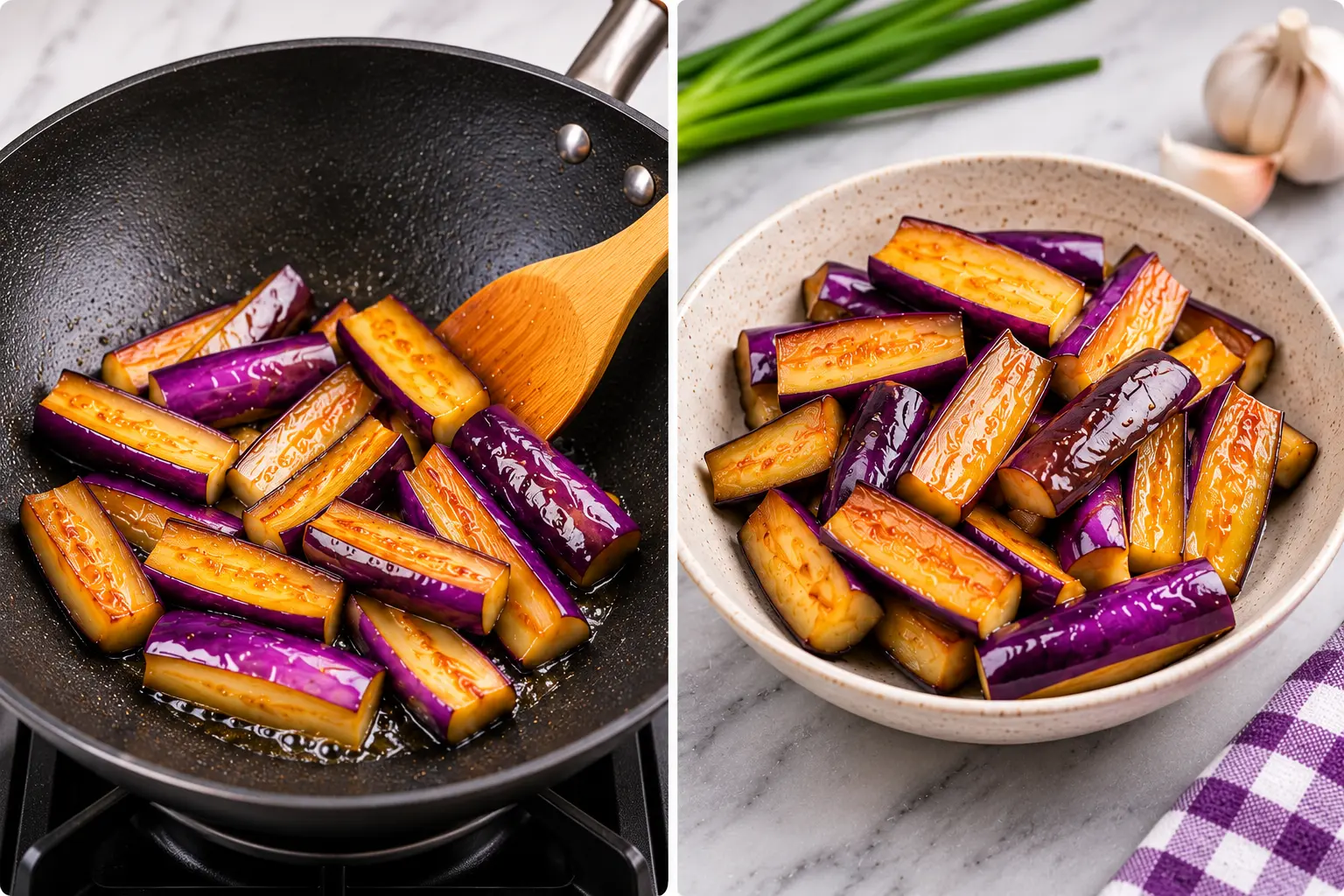 Avoid overcrowding the wok. Cook in batches if necessary to help the eggplant brown evenly.
Cook the Aromatics
-
Sauté the Garlic, Ginger, and Scallions
Add a little more vegetable oil to the same wok if needed. Add the minced garlic, chopped ginger, and white parts of the scallions. Stir-fry for about 30 seconds until fragrant.
Return the browned eggplant to the wok and toss gently with the aromatics.
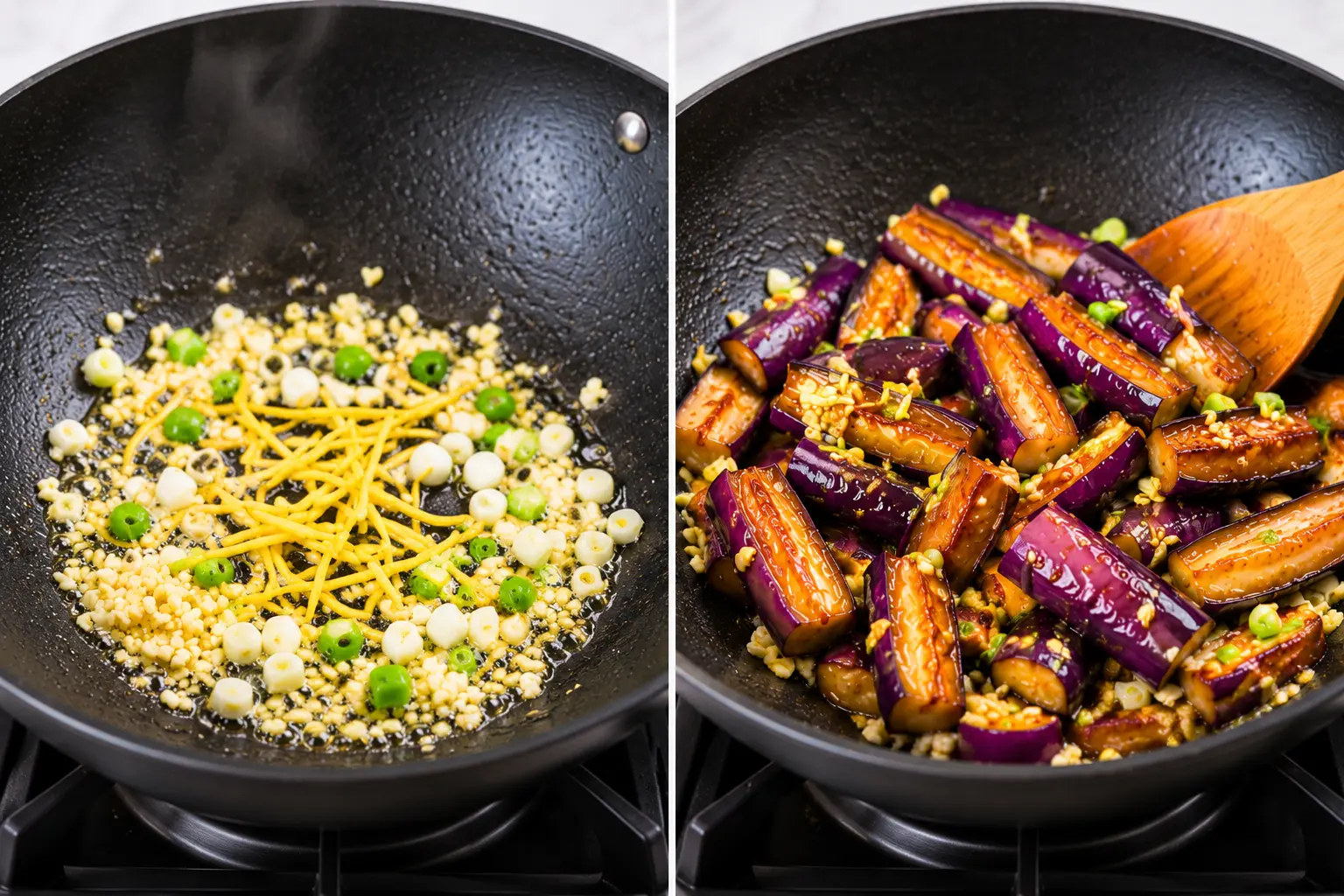 Keep the garlic moving to prevent it from burning.
Prepare the Braising Sauce
-
Mix the Savory Chinese Sauce
In a small bowl, whisk together the regular soy sauce, dark soy sauce, Shaoxing rice wine, sugar, black vinegar, and chili flakes until combined and the sugar is mostly dissolved.
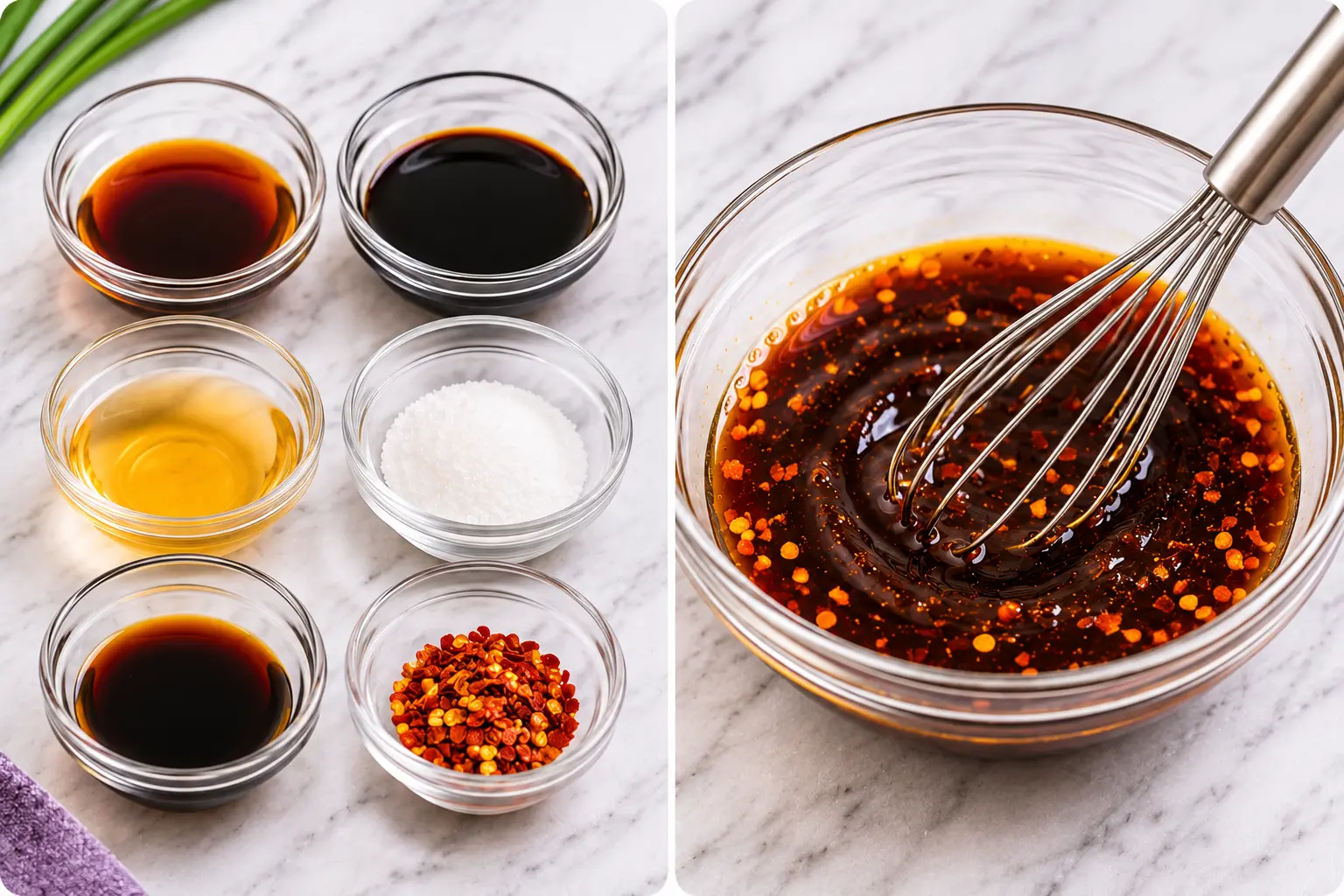 Adjust the chili flakes to your preferred spice level.
Braise the Eggplant
-
Simmer Until Soft and Flavorful
Pour the prepared sauce over the eggplant and toss gently to coat. Add the water or chicken stock, then reduce the heat to low. Cover and simmer for 10–15 minutes, stirring gently once or twice, until the eggplant is completely tender but still holds its shape.
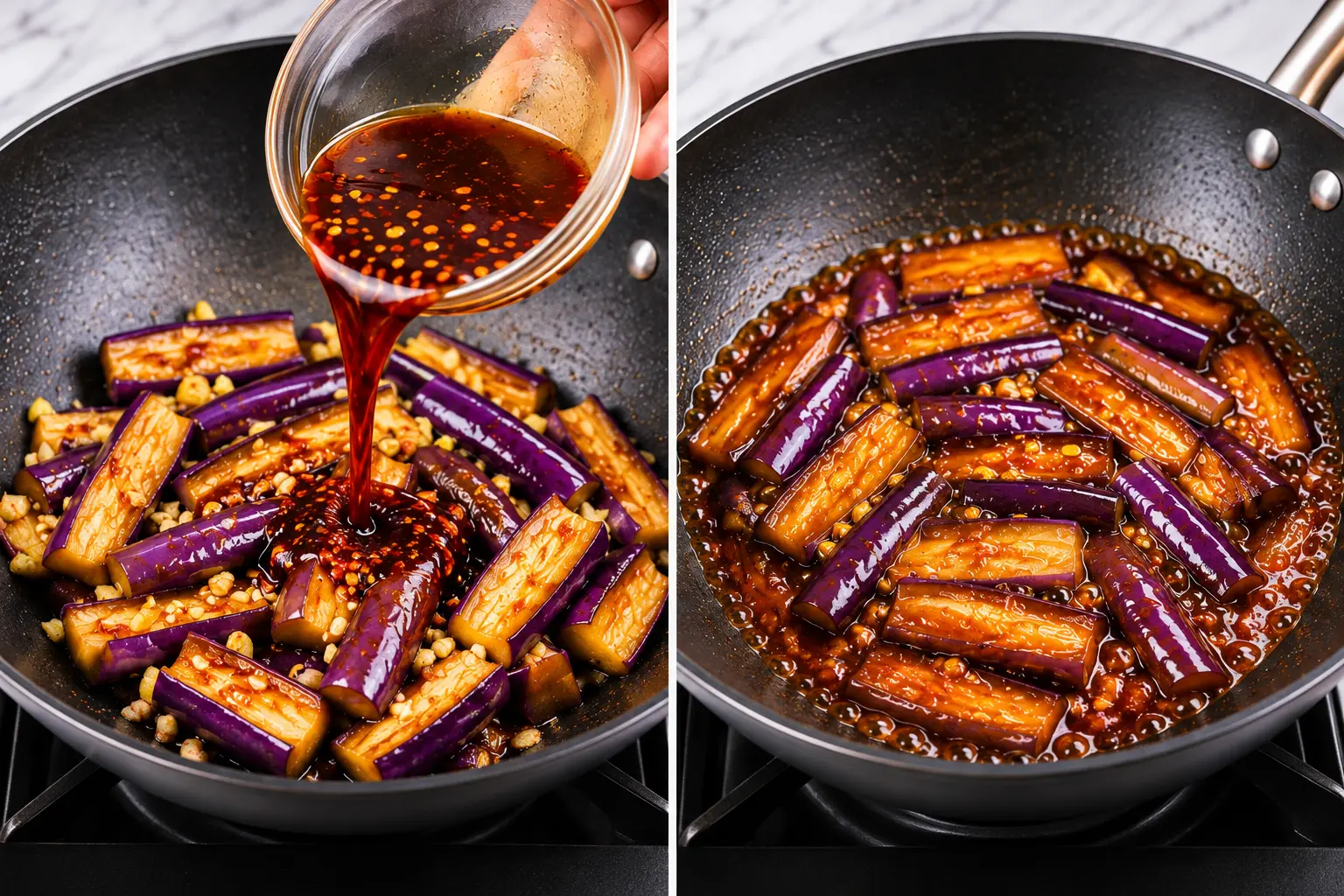 Check tenderness with a fork. The eggplant should be soft enough to pierce easily.
Thicken the Sauce and Serve
-
Add the Cornstarch Slurry and Garnish
In a small bowl, mix the cornstarch with 1 tablespoon of water until smooth. Stir the slurry into the wok and cook briefly until the sauce thickens and becomes glossy.
Turn off the heat and sprinkle the reserved green scallion parts over the eggplant. Serve warm with steamed rice or your favorite Chinese-inspired dishes.
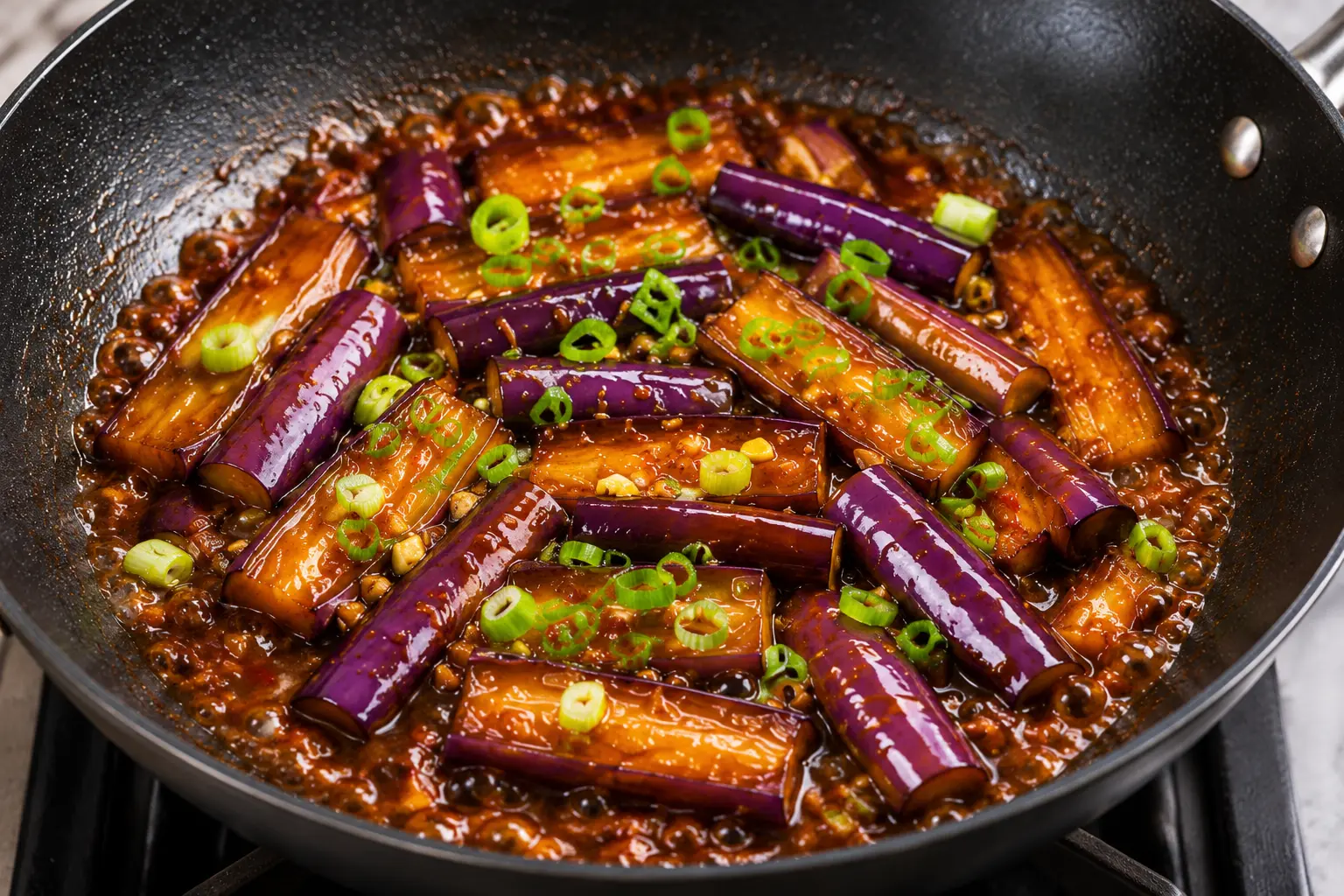 Add the cornstarch slurry gradually and stir gently to create a smooth, glossy sauce.
Nutrition Facts
Servings 4
- Amount Per Serving
- Calories 140kcal
- % Daily Value *
- Total Fat 10.5g17%
- Saturated Fat 1.2g6%
- Total Carbohydrate 14g5%
- Dietary Fiber 3.8g16%
- Sugars 5.5g
- Protein 2.2g5%
- Vitamin A 25 mcg
- Vitamin C 4 mg
- Calcium 15 mg
- Iron 0.4 mg
* Percent Daily Values are based on a 2,000 calorie diet. Your daily value may be higher or lower depending on your calorie needs.
Note
- Choose slender Chinese or Japanese eggplants for the best texture and results.
- For a vegetarian version, use vegetable or mushroom stock instead of chicken stock.
- Serve with steamed white rice or brown rice to soak up the flavorful sauce.